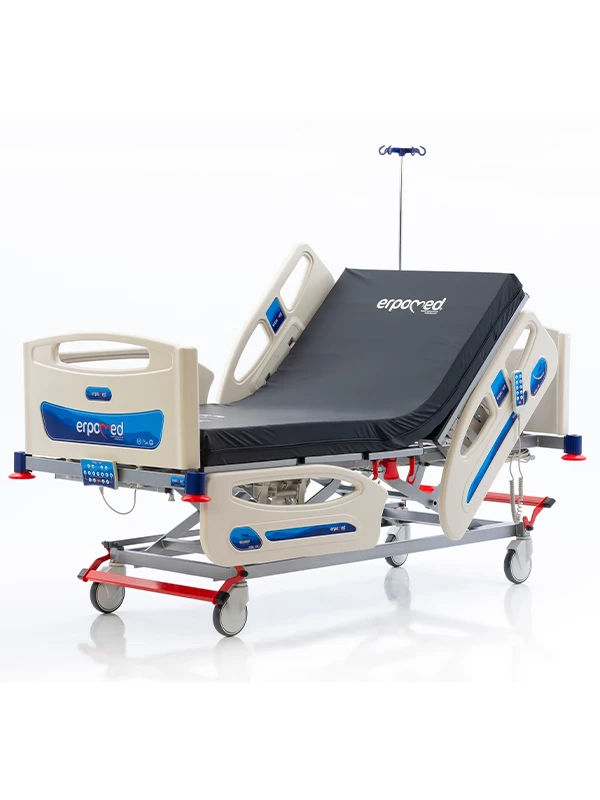
1. Executive Procurement Overview & Semantic Intent Analysis
When healthcare organizations, regional ministry health departments, and private hospital chains evaluate the acquisition of a maternity ward delivery bed, the decision extends far beyond basic patient comfort. Modern maternal healthcare requires multi-functional LDR (Labor, Delivery, Recovery) platforms capable of transitioning within seconds from an ergonomic resting bed to an emergency-ready obstetrical delivery table.
Global procurement intent queries consistently focus on four operational pillars: clinical safety during active labor, rapid mechanical transition during shoulder dystocia or postpartum hemorrhage, infection prevention standard compliance, and total cost of ownership (TCO) across 10+ year lifecycle operations. As a leading CE-certified Turkish manufacturer exporting to over 77 countries, Erpomed engineers every maternity ward delivery bed to address these exact clinical and operational demands.
From linear actuator torque ratings to seamless antibacterial polyurethane mattresses, selecting the correct maternity delivery bed requires an in-depth understanding of structural load dynamics, electrical safety standards (IEC/EN 60601-1), and midwife ergonomic efficiency.
2. Premier Maternity Ward Delivery Bed Models & Technical Specifications
To assist procurement teams in aligning equipment capabilities with ward budget levels and clinical tier requirements, Erpomed offers precision-manufactured electric delivery beds and multifunctional obstetric tables. Below are three of our flagship configurations utilized in municipal hospitals and private maternity centers worldwide.
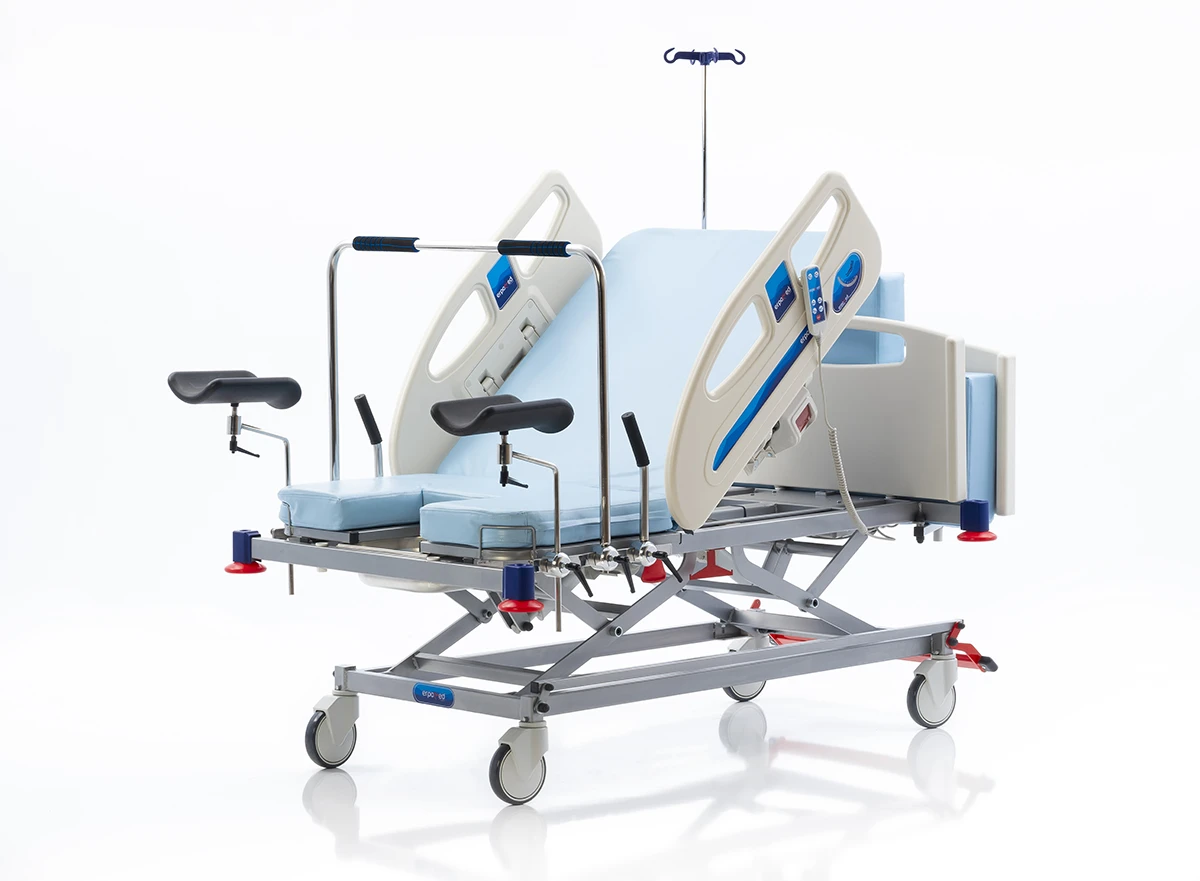
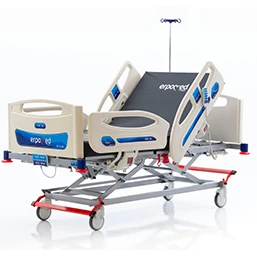
Flagship LDR Platform ED-5 Premium Electric Delivery Bed
Fully motorized 4-actuator LDR bed with electric Trendelenburg, quick-release telescoping leg section, and integrated nurse control panel.
- Actuator System: 4x Linak / Dewert Motors
- Safe Working Load: 250 kg (550 lbs)
- Trendelenburg: ±16° Electric Tilt
- Mattress Section: Seamless Polyurethane
- Central Brake: 150mm Castors with Pedal
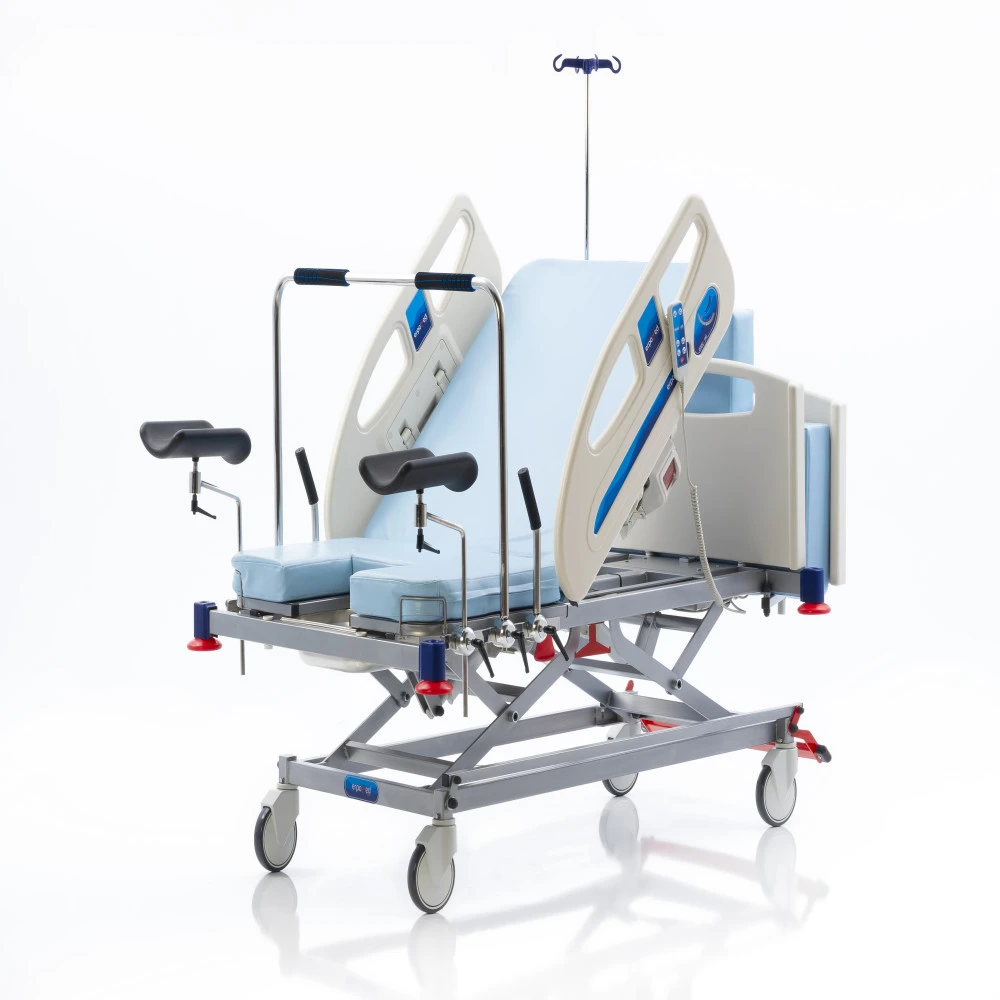
Compact Obstetric & Gyn Unit ERP-1260 Multifunctional Table
Versatile hybrid design serving as both a gynecology examination table and an emergency labor delivery platform for high-throughput wards.
- Adjustment Mechanism: Electric Height & Backrest
- Basin Attachment: Stainless Steel Slide-Out
- Leg Support: Padded Goepel Knee Crutches
- Frame Coating: Electrostatic Epoxy Powder
- CPR Release: Manual Dual-Sided Lever
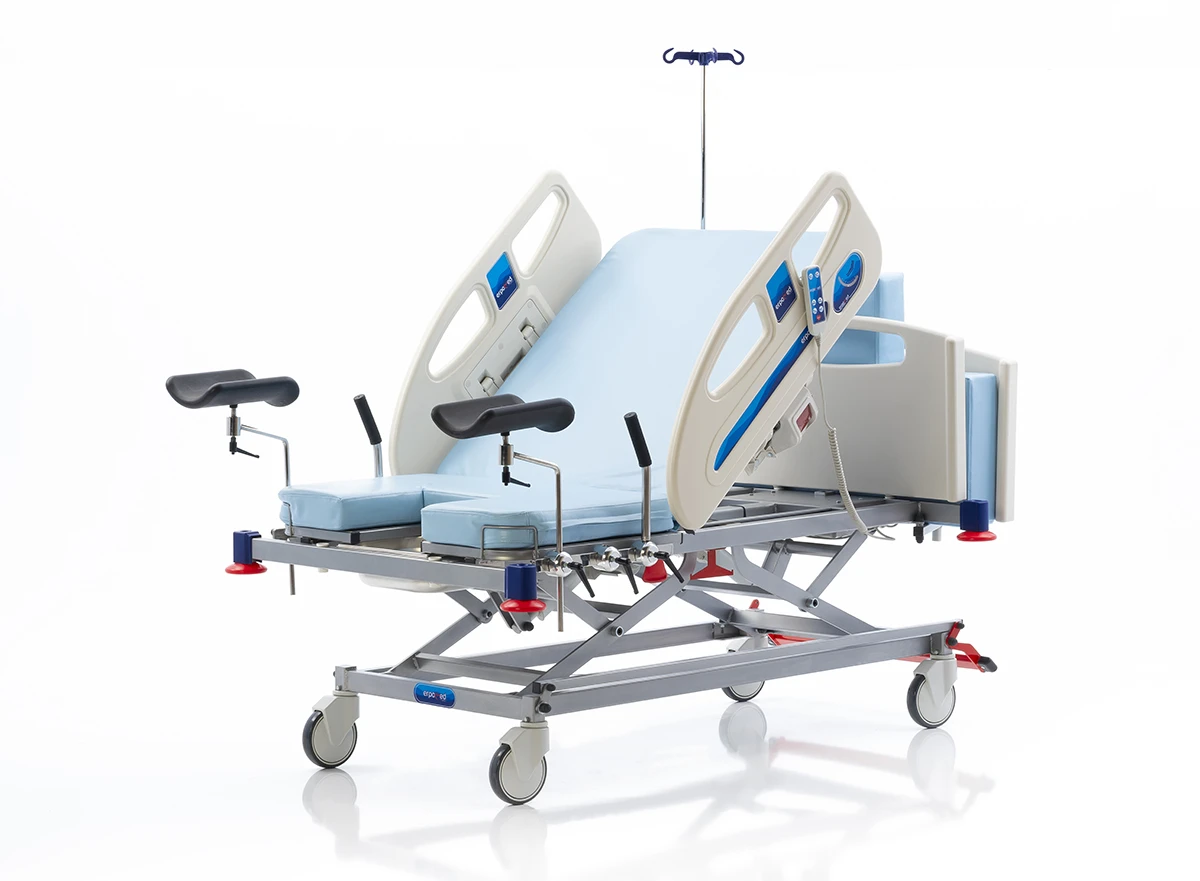
High-Durability Standard Ward Bed ED-2 Maternity Delivery Bed
Engineered for high-volume maternity wards requiring robust mechanical reliability, effortless sanitation, and intuitive midwife controls.
- Motor Count: 2-3 High-Torque Linear Motors
- Side Rails: Fold-Down ABS / Polypropylene
- Foot Rest: Slide-in Under Mattress Frame
- Battery Backup: 24V DC Rechargeable
- Compliance: CE, ISO 13485, ISO 9001
Technical Matrix Comparison for Procurement Planning
Biomedical engineering departments require exact quantitative parameters when writing tender specifications. The matrix below outlines the critical mechanical and electrical ratings across Erpomed’s maternity ward delivery bed portfolio:
| Technical Specification | ED-5 Premium LDR Bed | ERP-1260 Delivery & Gyn Table | ED-2 Standard Maternity Bed |
| Primary Application | LDR & LDRP Single Suites | Gynecology / Emergency Delivery | General Maternity Ward / Delivery |
| Actuator Voltage / Protection | 24V DC / IPX4 Waterproof | 24V DC / IPX4 Waterproof | 24V DC / IPX4 Waterproof |
| Safe Working Load (SWL) | 250 kg | 200 kg | 230 kg |
| Backrest Articulation | 0° to 70° (Electric) | 0° to 65° (Gas Spring / Electric) | 0° to 70° (Electric) |
| Trendelenburg Angle | 0° to +16° / -16° (Reverse) | 0° to +12° | 0° to +12° |
| Leg Rest Stowage | Telescopic Slide-under Frame | Detachable Foot Section | Fold-under Swivel System |
| Fluid Basin Capacity | 15 Liters (Stainless Steel AISI 304) | 10 Liters (Stainless Steel) | 12 Liters (Stainless Steel) |
| Braking Architecture | Central Directional Lock | Individual Wheel Brakes | Central Pedal Braking |
3. Future Procurement Trends in Global Maternity Equipment
The global maternal healthcare landscape is undergoing a structural paradigm shift. Hospital planners and ministry procurement experts are no longer purchasing single-purpose obstetric tables; instead, capital expenditure is directed toward versatile, ergonomic, and smart maternity ward delivery bed platforms. Five key trends are shaping international procurement specifications:
3.1 Transition to Unified LDR & LDRP Care Models
Modern obstetric practices favor Labor, Delivery, Recovery (LDR) and Labor, Delivery, Recovery, Postpartum (LDRP) care models. In an LDR suite, the patient remains in a single room on the same bed throughout the entire birthing process. This setup reduces maternal stress and eliminates hazardous patient transfers. Consequently, procurement specifications now demand delivery beds that look and feel like warm, non-clinical hospital room furniture during early labor, yet instantaneously transform into surgical-grade delivery platforms with footrests, knee crutches, grab handles, and splash basins during stage-two labor.
3.2 Advanced Infection Control & Seamless Surface Engineering
Hospital-Acquired Infections (HAIs) in neonatology and obstetrics carry severe clinical and financial risks. Future-proof delivery bed designs eliminate unsealed seams, exposed screw heads, and porous foam padding. Erpomed integrates vacuum-formed ABS sub-mattress covers and high-density polyurethane mattresses with high-frequency welded liquid-impermeable covers. These surfaces resist harsh chlorine-based hospital disinfectants and prevent bio-fluid pooling within structural crevices.
3.3 Enhanced Ergonomics for Midwives & Obstetricians
Occupational back injuries among nursing staff represent a significant cost center for hospital systems worldwide. Modern delivery beds integrate ultra-low minimum heights (under 500 mm) to allow safe patient ingress, paired with elevated maximum heights (exceeding 900 mm) to bring the birth canal to an ergonomically comfortable position for attending midwives during active delivery. Motorized leg-section movement and foot-pedal elevation controls empower clinicians to adjust bed geometry hands-free while maintaining sterile field compliance.
3.4 Bariatric Support & High Dynamic Load Stability
Rising global rates of maternal obesity necessitate higher weight capacities for delivery furniture. Standard delivery beds rated for 150 kg are rapidly being replaced by platforms engineered for 230 kg to 250 kg Safe Working Loads (SWL). Beyond static weight ratings, modern tenders scrutinize dynamic load stability—ensuring that when a heavy patient shifts position rapidly or when clinicians exert downward force during active labor assistance, the bed frame exhibits zero lateral sway or mechanical deflection.
Clinical Insight: Emergency CPR & Rapid Trendelenburg Transition
In cases of sudden amniotic fluid embolism, maternal cardiac arrest, or severe shoulder dystocia, seconds matter. Erpomed delivery beds feature dual-sided mechanical CPR levers that instantly drop the backrest flat in under 3 seconds, completely independent of electrical power supply, alongside one-touch electric Trendelenburg buttons on nurse hand-controllers.
4. Industry & Technological Evolution in Obstetric Furniture
Over the past three decades, obstetric furniture has evolved from rigid, heavy cast-iron delivery tables into lightweight, highly articulated, micro-processor-controlled clinical systems. Understanding this historical trajectory helps hospital committees evaluate why modern engineering features yield tangible clinical benefits.
4.1 Biomechanical Alignment & Natural Birthing Positions
Historically, lithotomy (supine with legs elevated in stirrups) was the standard delivery position enforced by rigid mechanical tables. However, modern clinical research proves that upright, squatting, semi-Fowler, and side-lying positions widen the pelvic outlet and shorten labor duration. Contemporary maternity ward delivery beds incorporate modular leg rests, removable footboards, and multi-axis knee supports (Goepel crutches) that enable natural birthing postures while maintaining complete clinical accessibility for the delivery team.
4.2 Microprocessor Integration & Telemetry Compatibility
Modern hospital infrastructure relies on central ward management systems. Next-generation delivery beds are built with digital sensor arrays capable of monitoring patient position, side-rail status, central brake engagement, and integrated patient weighing scale data. Electric linear actuators now utilize Hall-effect sensors to report precise angular positioning back to central control systems, ensuring smooth, synchronized movement across all mattress deck sections.
5. Enterprise Strengths & E-E-A-T Compliance: Why Choose Erpomed?
Selecting a manufacturing partner for hospital equipment requires rigorous due diligence. Erpomed stands as a globally recognized manufacturer based in Gaziantep, Turkey, combining precision engineering, European component sourcing, and competitive export economics.
25+ Years of Manufacturing Excellence
Since 1999, Erpomed has focused exclusively on medical furniture, ICU equipment, emergency stretchers, and maternity solutions. Our state-of-the-art production facility utilizes robotic laser cutting, automated CNC pipe bending, and automated electrostatic powder coating lines to guarantee flawless structural integrity across every bed frame produced.
Our direct export network spans 77+ countries across Europe, the Middle East, Africa, Latin America, and Asia, making Erpomed a trusted partner for tender boards and international healthcare distributors.
International Certification Framework
Every maternity ward delivery bed manufactured by Erpomed complies strictly with international regulatory frameworks:
- ISO 13485:2016: Comprehensive Quality Management Systems for Medical Devices.
- ISO 9001:2015: Industrial Quality Management and Design Control.
- CE Medical Device Regulation (MDR 2017/745): Certified compliance for distribution within the European Union and global markets recognizing CE marks.
- EN 60601-1 & EN 60601-2-38 / EN 60601-2-52: Rigorous electrical safety, electromagnetic compatibility, and mechanical entrapment prevention standards for medical beds.

Ready to discuss custom tender specifications or request direct factory quotes?
Send an Inquiry 6. Frequently Asked Questions (FAQ) for Procurement Officers
Below are detailed answers to the most common questions submitted by global hospital buyers, tender managers, and biomedical engineers during the procurement evaluation process.
Q1: What structural features differentiate a maternity ward delivery bed from a standard medical surgical bed?
A specialized maternity ward delivery bed features a split mattress deck where the leg section can be quickly retracted, stowed underneath the main frame, or detached entirely. This design opens up immediate pelvic access for obstetric interventions while providing integrated leg crutches (Goepel supports), stainless steel fluid collection basins, grab handles for active pushing, and elevated Safe Working Loads specifically calibrated for labor dynamic forces. Standard medical beds lack these rapid pelvic conversion mechanisms and specialty birthing attachments.
Q2: How does Erpomed ensure fluid resistance and electrical safety during delivery procedures?
Delivery procedures involve significant fluid volume exposure. All Erpomed electric delivery beds feature linear motors and control units rated to IPX4 or IPX6 ingress protection standards, protecting electrical components against water splashes and fluids. Wiring harnesses are routed internally inside the powder-coated steel chassis, and hand control pendants use sealed membrane buttons. Additionally, seamless polyurethane mattress covers prevent fluid ingress into the core foam padding.
Q3: What linear actuator motors does Erpomed use, and what is their expected lifespan?
Erpomed equips its delivery beds with industry-leading linear motors manufactured by Linak (Denmark) or Dewert (Germany). These 24V DC actuators feature thermal overload protection, low operating noise (under 48 dB), and emergency battery backup integration. Under standard clinical usage conditions and routine preventive maintenance, these motor systems carry an operational design life exceeding 10 years.
Q4: How are Erpomed delivery beds packaged for overseas container shipping?
To maximize freight efficiency and protect equipment during international maritime transport, beds are wrapped in heavy-duty protective bubble film, corner-shielded, and packaged into export-grade corrugated cartons or heat-treated wooden crates conforming to ISPM 15 standards. A standard 40-foot High Cube (40HQ) container can accommodate up to 28 to 36 delivery bed units depending on the specific model and disassembly configuration.
Q5: Can Erpomed support OEM/ODM requests and custom color schemes for private hospital groups?
Yes. As a direct manufacturer, Erpomed offers extensive OEM/ODM capabilities. We can customize powder coating colors (RAL spectrum), side-rail ABS panel graphics, brand logo integration, control panel button layouts, and custom mattress density profiles to match private healthcare system branding guidelines and regional market requirements.
Q6: What warranty coverage and spare parts support does Erpomed provide globally?
Erpomed provides a standard 2-year comprehensive factory warranty covering structural frames, linear motors, and electronic controllers, backed by a 10-year guaranteed spare parts supply commitment. Spare parts orders are dispatched rapidly via DHL/FedEx express courier directly from our central facility in Gaziantep, Turkey, to minimize hospital equipment downtime.
Equip Your Maternity Ward with CE-Certified Turkish Engineering
Contact Erpomed’s international sales engineering department to request technical data sheets, 3D CAD models for ward layout planning, or direct factory price quotes for your upcoming hospital tender.
Send an Inquiry