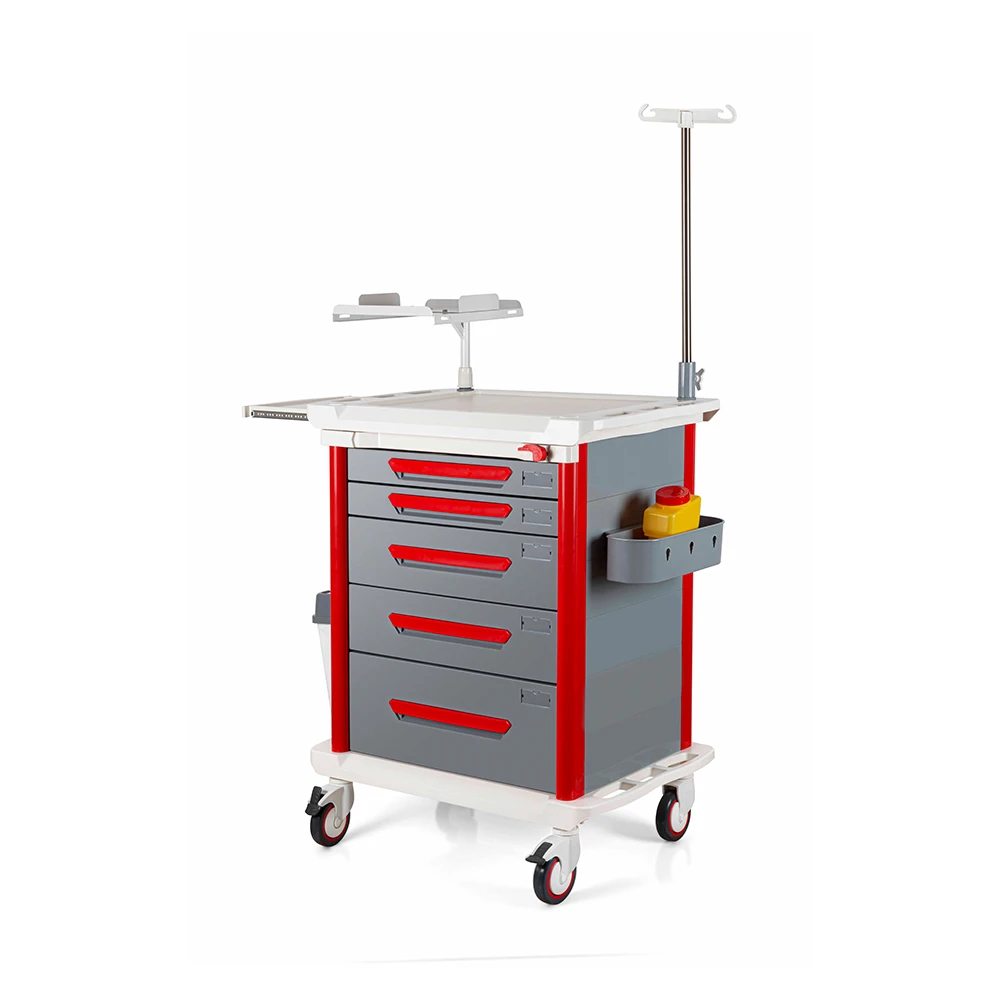
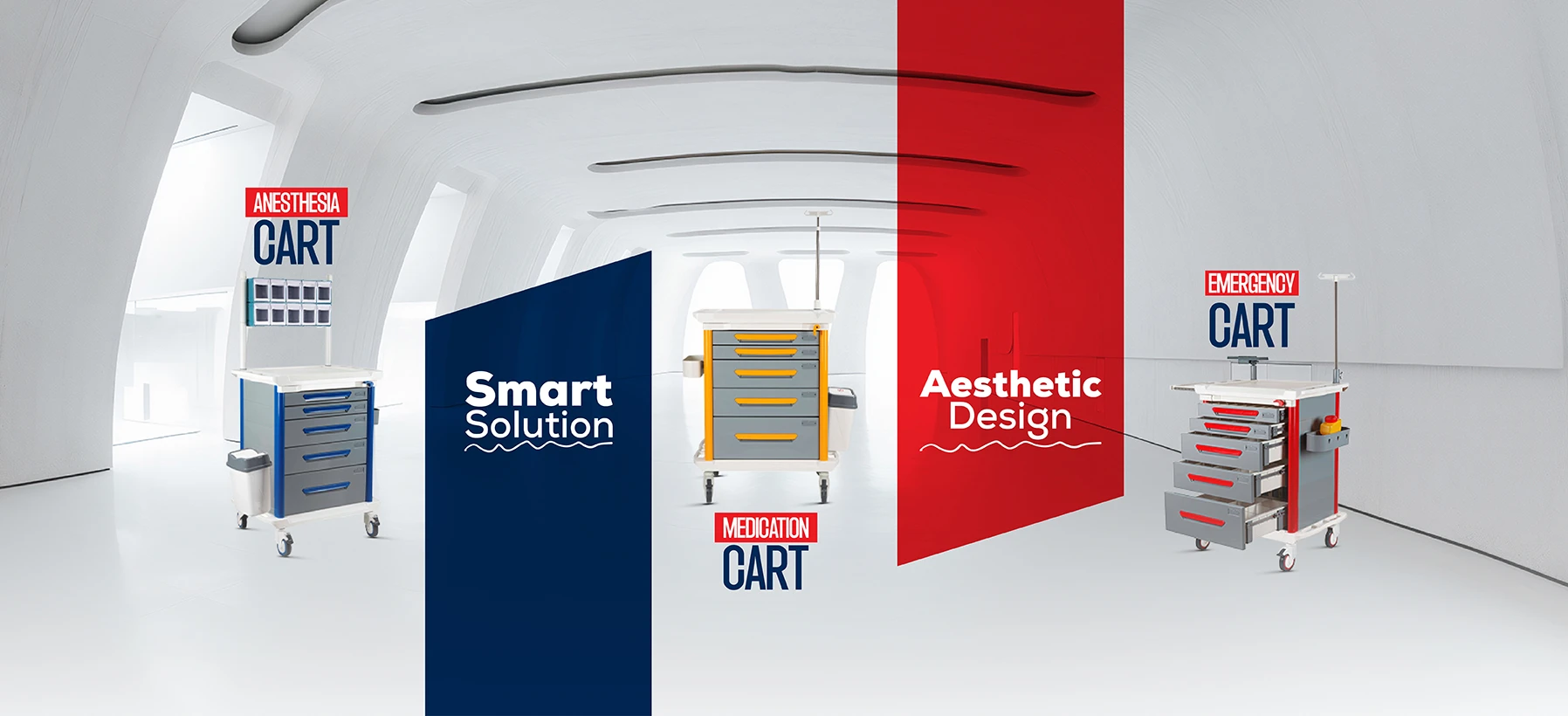
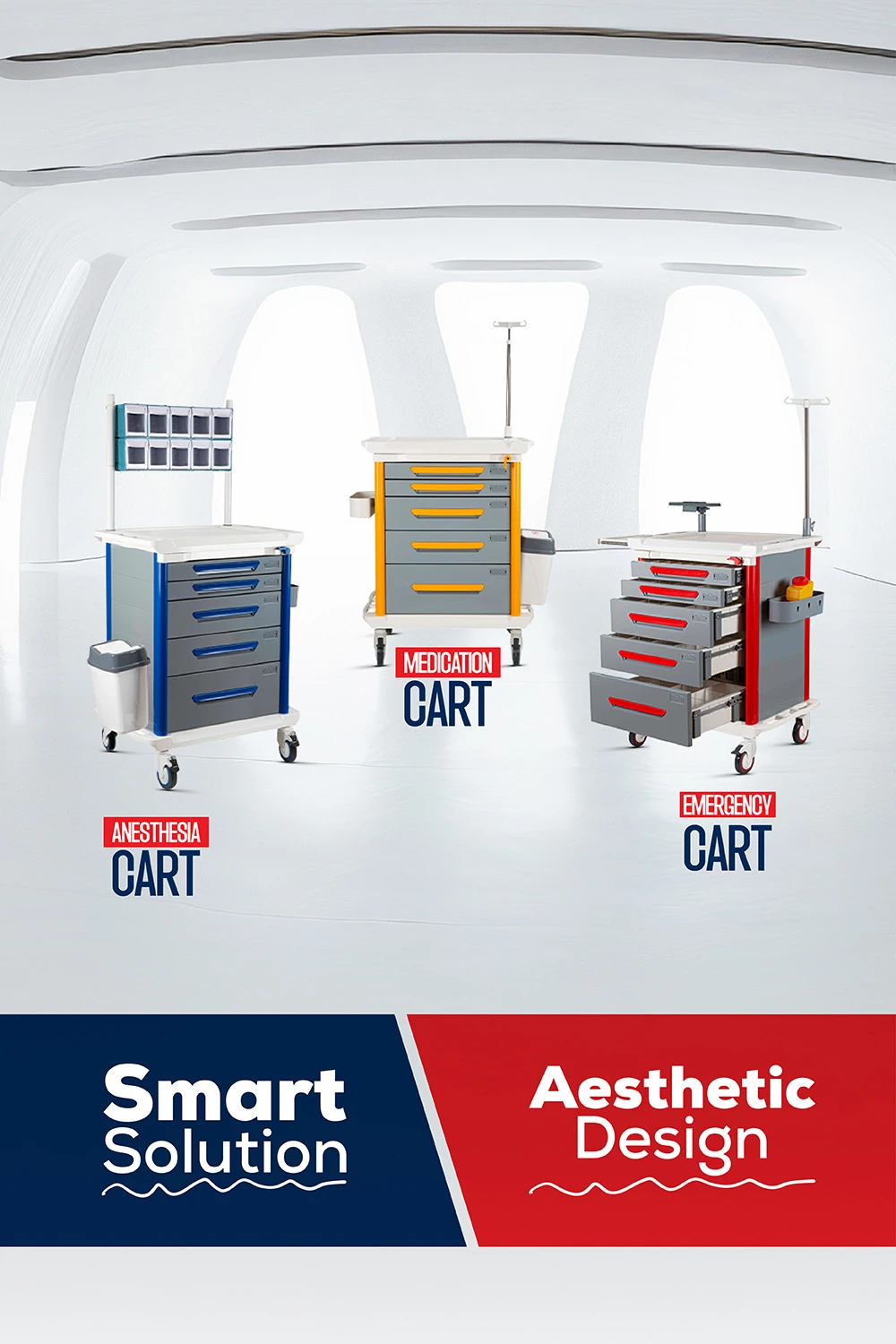
In modern acute care environments—ranging from high-acuity Intensive Care Units (ICUs) and Emergency Departments (ED) to operating theaters and general inpatient wards—the hospital medical trolley operates as the foundational mobile workstation supporting clinical workflow efficiency, patient safety, and immediate emergency intervention. Far from being simple utilitarian furniture, a clinical-grade medical trolley is an intricately engineered piece of medical equipment designed to solve critical operational bottlenecks: minimizing nurse response latency during Code Blue emergencies, maintaining strict chain-of-custody for controlled pharmaceuticals, and upholding rigorous infection control barriers.
Global hospital procurement metrics reveal that over 42% of nurse physical fatigue and non-value-added movement during a 12-hour shift stems from searching for displaced medical supplies or negotiating rigid, poorly configured storage carts. By standardizing department workflows with ergonomic, modular, and departmentalized hospital medical trolleys, healthcare facilities can decrease medication administration errors by up to 34% while optimizing emergency resuscitation protocol execution times.
Clinical Insight: Semantic Shift in Medical Trolley Procurement
Modern AI-driven search models and hospital procurement guidelines prioritize semantic functionality over basic dimensional capacity. Buyers no longer evaluate carts solely by total drawer volume; they demand multi-layered verification of antimicrobial polymer degradation resistance, anti-static grounding continuity, drawer seal integrity during rapid transport, and modular accessory mounting rails engineered under ISO 11199 mobility standards.