1. Executive Summary & Search Intent Mapping for Hospital Procurement
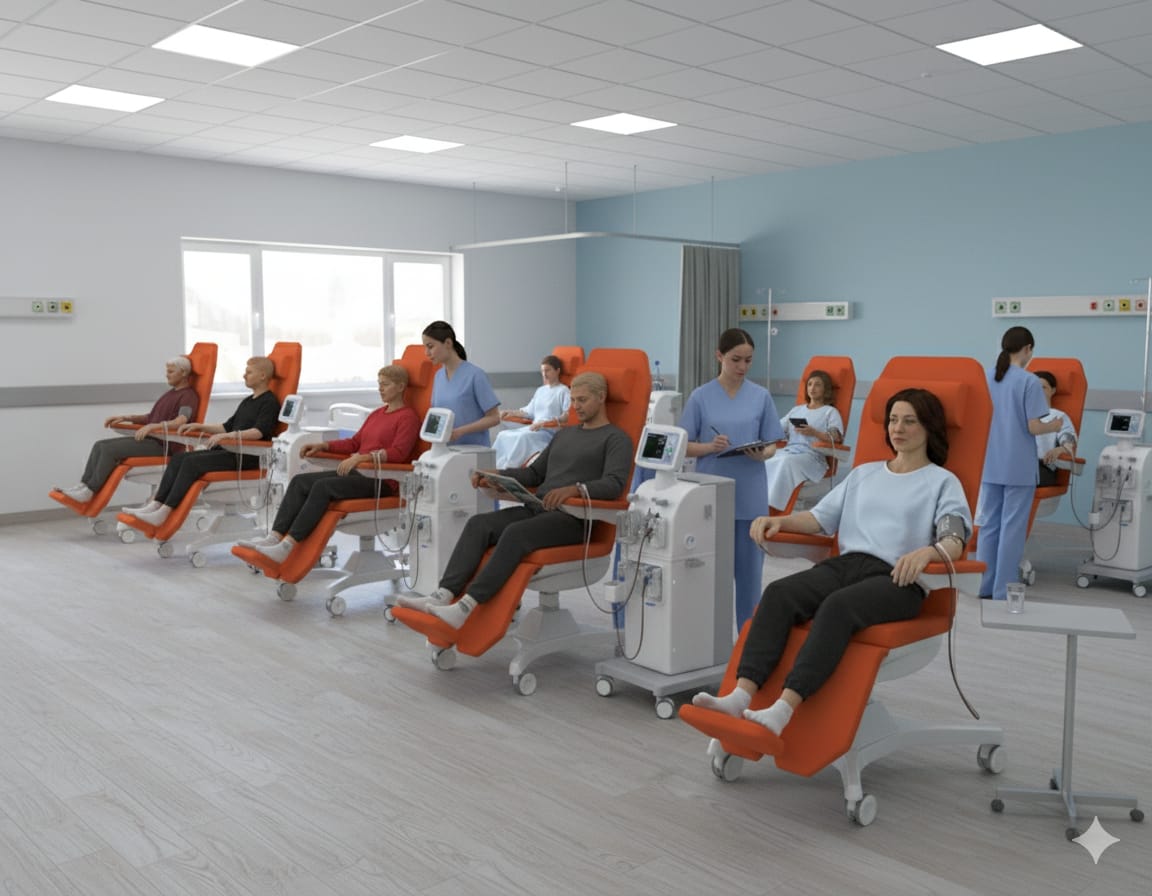
In modern renal replacement therapy, the electrical dialysis chair serves as the fundamental physical interface between the patient, clinical staff, and extracorporeal blood purification circuits. Hemodialysis procedures typically require patients to remain seated or semi-recumbent for four to six hours per session, executed three times per week. Consequently, hospital purchasing committees, ministry of health tenders, and private dialysis center developers must navigate a complex matrix of ergonomic, biomechanical, structural, and infection-control requirements when evaluating medical chairs.
Search intent data collected across international medical procurement channels indicates that global buyers frequently investigate several critical parameters: motorized positioning flexibility, shock response speeds (Trendelenburg activation), frame durability under high patient turnover, antibacterial surface resistance, and long-term actuator maintenance costs. This technical guide synthesizes empirical manufacturing data, clinical safety standards, and commercial procurement best practices to provide biomedical engineering teams with complete clarity.
Strategic Information Gain: TCO vs. Initial Unit Price
Analysis of over 1,200 clinical dialysis installations globally demonstrates that initial capital expenditure (CapEx) accounts for only 35% of a medical chair's 10-year Total Cost of Ownership (TCO). High-quality linear actuators (such as LINAK or Dewert systems), seamless upholstery welding, and electrostatic powder-coated anti-corrosion frames reduce operational maintenance costs (OpEx) by up to 62% over a 7-year continuous operating cycle.
2. Engineering Architecture of High-Performance Electrical Dialysis Chairs
An electrical dialysis chair differs fundamentally from standard hospital recliners or manual examination couches. It is an active medical device subject to stringent electromechanical safety guidelines, including EN 60601-1 and EN 60601-1-2 (Electromagnetic Compatibility). The structural and functional integrity of these chairs rests on four primary engineering pillars:
A. Linear Actuator Systems & Kinematic Segments
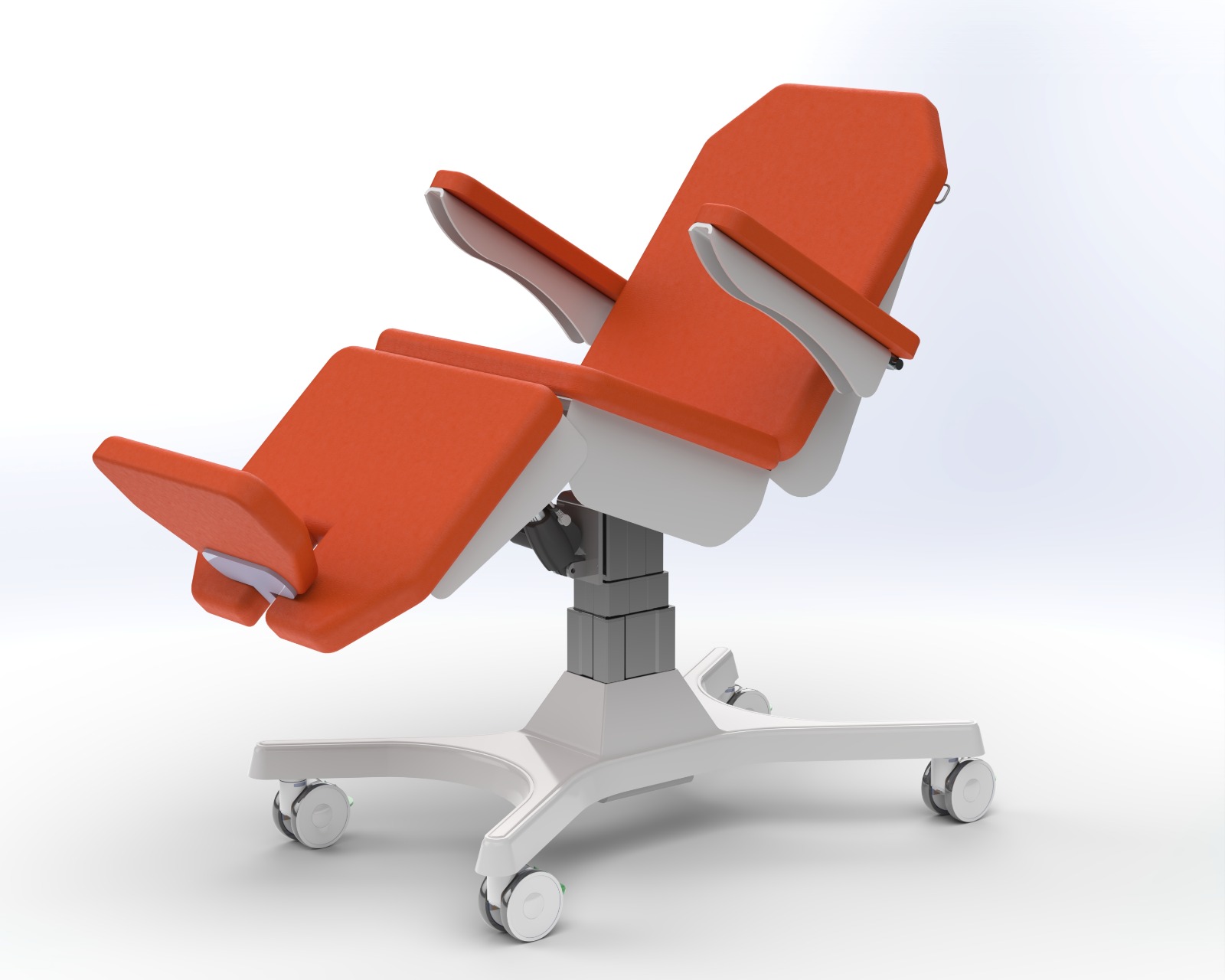
The core functionality of an electrical dialysis chair is determined by its motor configuration. Modern clinical facilities overwhelmingly specify multi-motor systems (typically 3-motor or 4-motor architectures):
- Backrest Motor: Regulates trunk elevation from 0° (flat horizontal) to +75° or +80° upright, allowing patients to adjust between sleeping, reading, and eating positions.
- Legrest Motor: Controls lower extremity elevation from -90° (knee flexion) to 0° (full extension), essential for mitigating peripheral edema and preventing muscle cramping during fluid removal.
- Height Adjustment Motor: Modulates vertical elevation (typically from 550 mm up to 850 mm). High vertical clearance enables nephrologists and vascular surgeons to access arteriovenous (AV) fistulas without postural strain, reducing occupational musculoskeletal injuries.
- Trendelenburg Motor: Provides rapid tilt mechanism (-12° to -15° negative tilt). In cases of acute intra-dialytic hypotension or hypovolemic shock, swift positioning of the patient's head below the heart level is vital for restoring cerebral perfusion.
Precision Motor Engineering
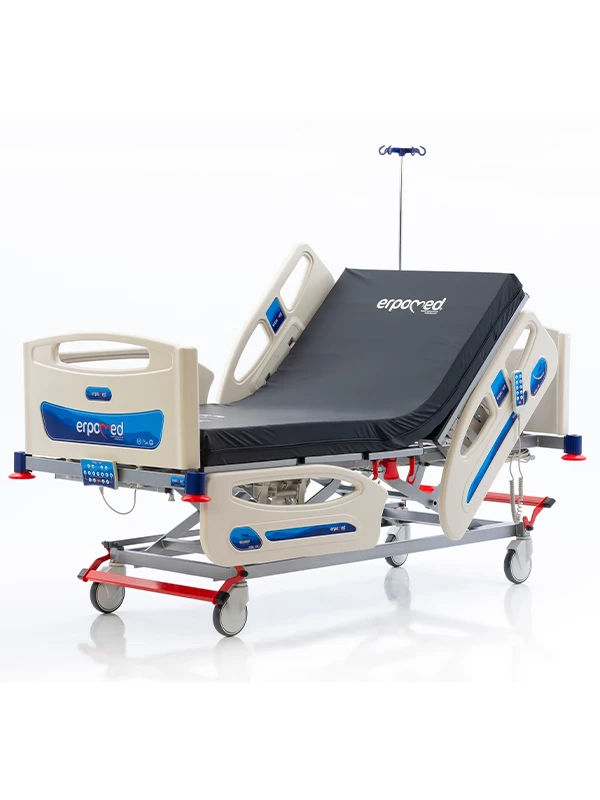
Erpomed incorporates heavy-duty 24V DC quiet-running linear actuators engineered for smooth, vibration-free transition. Our 4-motor system features synchronized motion algorithms, preventing tissue shear stress on the patient's skin during simultaneous backrest and legrest adjustments.
- Low voltage 24V DC actuators (IPX4 moisture protection)
- Emergency manual CPR release for instant flat positioning
- Integrated battery backup delivering 30+ full movement cycles
B. Structural Frame Dynamics & Anti-Corrosion Treatments
Hemodialysis environments are exposed to corrosive agents, including saline solutions, acid concentrate refills, and aggressive surface disinfectants (e.g., sodium hypochlorite). Frame construction requires high-tensile steel tubing processed through multi-stage surface treatments:
- Degreasing & Phosphating: Chemically removes oils and prepares steel surfaces for adhesion.
- Electrostatic Powder Coating: Application of epoxy-polyester powder baked at 200°C, establishing a non-porous barrier resistant to impact, chemical staining, and oxidation.
- Safe Working Load (SWL): Reinforced cross-bracing design guarantees a Safe Working Load of 200 kg to 250 kg, accommodating bariatric patient demographics without structural deflection.
C. Clinical Upholstery & Hygiene Engineering
Infection prevention is paramount in high-turnover outpatient units. Upholstery design must eliminate fluid ingress channels:
- Seamless Antibacterial PU/PVC Leather: High-density poly-foam cushions (35–40 kg/m³) wrapped in biocompatible, flame-retardant (EN 1021-1/2) cover material.
- Resistant to Disinfectants: Formulated to withstand daily cleaning with active chlorine solutions, quaternary ammonium compounds, and alcohol-based sprays without cracking or color degradation.
- Ergonomic Support Contours: Integrated lumbar support and adjustable headrests reduce pressure points, lowering the incidence of decubitus ulcer formation during prolonged treatments.