
1. The Evolutionary Shift in Maternity Care: Labor, Delivery, and Recovery (LDR) Ergonomics
In modern obstetrics, patient comfort and rapid clinical response are directly linked to equipment design. Traditional birthing protocols required transferring laboring mothers across multiple rooms and disparate equipment platforms—from a standard triage hospital bed to a surgical obstetrical table. This manual movement created severe physical strain for clinical personnel and heightened maternal stress during critical labor stages.
The widespread global adoption of the Electric Delivery Bed (often categorized as an LDR Bed or Motorized Birthing Table) addresses this operational friction. Engineered to support the full continuum of childbirth—first-stage labor monitoring, second-stage active delivery, third-stage placental management, and post-partum recovery—a high-performance electric delivery bed eliminates patient transfers entirely.
Key Clinical Insight: According to clinical ergonomic studies, over 64% of occupational injuries among obstetrical nurses occur during patient repositioning and leg-rest installation on manual birthing tables. Motorized motorized adjustments—governed by precision linear actuators—reduce physical strain on medical staff while enabling instantaneous positioning during obstetric emergencies like shoulder dystocia or umbilical cord prolapse.
Beyond operational ease, modern obstetrical research highlights the importance of physiological birthing postures. Electric delivery beds allow pregnant women to alter positions smoothly—from upright sitting and squatting postures to semi-Fowler's and lithotomy configurations—using intuitive hand pendants or lateral side-rail controls. This mobility facilitates natural gravity-assisted descent during labor, reducing second-stage delivery duration and lowering intervention rates.
2. Engineering Architecture & Essential Technical Specifications
Evaluating an electric delivery bed for hospital group tenders or government health ministry contracts requires a detailed examination of structural integrity, electromechanical drive systems, and infection prevention design. At Erpomed, our R&D engineering facility in Gaziantep, Turkey, manufactures birthing beds under ISO 13485 standards, adhering to rigid mechanical load limits and international electrical safety codes.
2.1 Linear Actuator Motor Architecture
The electromechanical heart of a premium delivery bed relies on medical-grade 24V DC linear actuators (such as Linak or Dewert systems). These motors must operate under low acoustic thresholds (<48 dB) to ensure a calm labor room environment. Standard configurations feature 3 to 4 independent motor channels:
- Height Adjustment Motor: Drives vertical elevation (typically 550 mm to 950 mm), enabling low entry height for ambulatory patients and elevated working positions for obstetricians.
- Backrest Elevation Motor: Smoothly articulates the torso section up to 70° for upright birthing positions and thoracic support.
- Trendelenburg / Reverse Trendelenburg Motor: Provides rapid tilt adjustments (+12° to -12°) essential for managing hypotension, prolapsed cords, or postpartum hemorrhage.
- Leg/Seat Section Motorization: Adjusts pelvic tilt to minimize lumbar shear and positions the lower mattress section for rapid retraction.
Fluid Ingress Protection
Control boxes, handsets, and linear actuators must meet IPX4 or IPX6 waterproof ratings to withstand liquid splash exposure and rigorous disinfectant washdowns during third-stage delivery cleaning.
Safe Working Load (SWL)
Engineered with heavy-gauge steel framing to support dynamic loads up to 250 kg (550 lbs), guaranteeing stability under high-stress clinical procedures and bariatric maternity care.
Integrated Battery Backup
High-capacity lead-acid or lithium battery backup systems maintain full motorized functionality for up to 50 operational cycles during acute hospital mains power outages.
Anti-Microbial Upholstery
Seamless, high-density polyurethane (PU) memory foam mattresses with high-frequency welded seams that prevent fluid penetration and resist harsh chemical disinfectants.
2.2 Modular Chassis & Obstetric Accessories Integration
An electric delivery bed must convert seamlessly into a fully functional obstetric surgical table within seconds. This requires an engineered leg section mechanism that either swivels beneath the main pelvic frame or detaches effortlessly onto a dedicated mobile docking cart. Essential integrated accessories include:
- Padded Ergonomic Knee Crutches (Geepel Legs): Fully adjustable in height, rotation, and radial spread with heavy-duty stainless steel locking clamps.
- Stainless Steel Fluid Collection Basin: Slide-out, high-capacity drainage tray (12–15 liter volume) fitted with fluid collection bag hooks and anti-splash baffles.
- Foldaway Anodized Side Rails: Tuck-away lateral safety barriers that lower beneath mattress height to enable smooth lateral patient transfers.
- Anesthesia Screen Holder & Telescopic IV Poles: Multi-position stainless steel attachments mounted to frame corner sockets.
3. Recommended Erpomed Electric Delivery Bed Models
Erpomed supplies a wide range of CE-certified maternity care equipment optimized for private hospital suites, public clinical wards, and emergency obstetric centers across 77+ countries. Below are our flagship recommended models engineered for global procurement tenders.
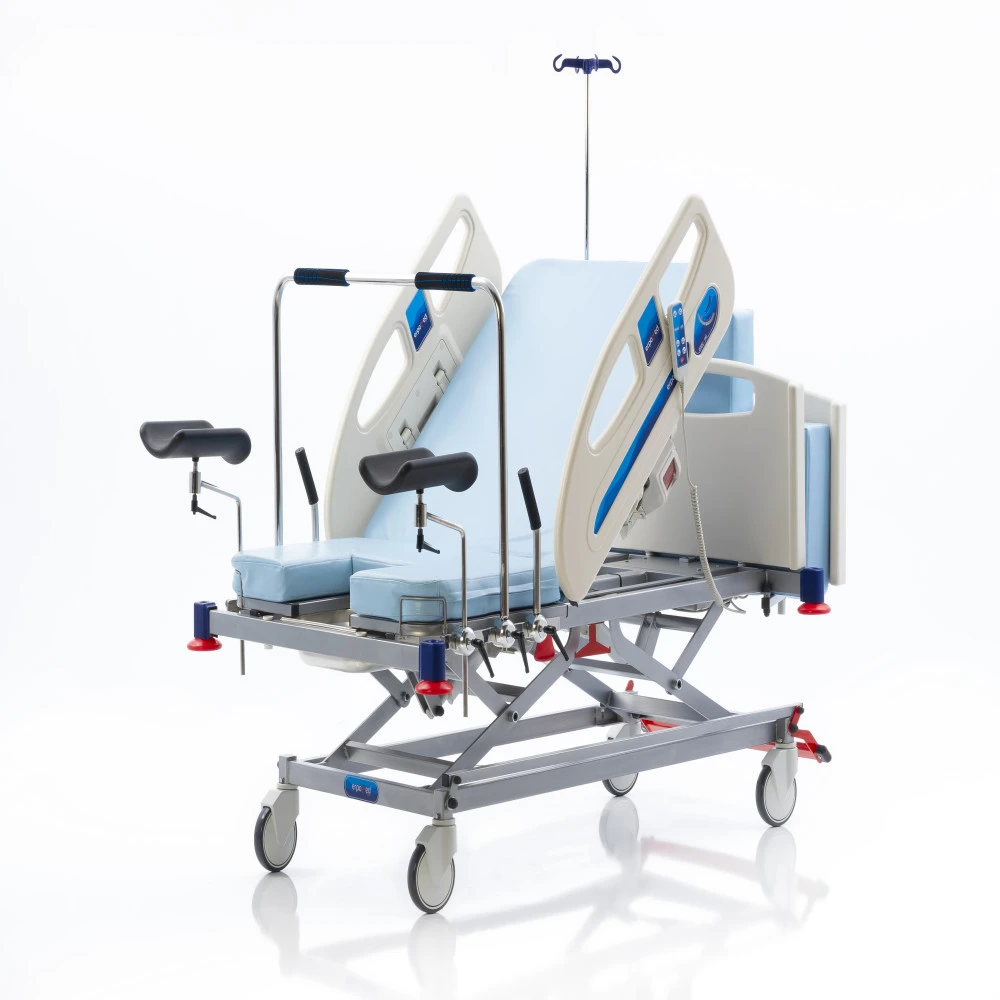
ERPOMED-1260 Luxury Electric Delivery Bed
Premium 4-motor electric birthing bed designed for high-end Labor, Delivery, and Recovery (LDR) maternity suites. Features motorized Trendelenburg tilt, retractable leg section, intuitive nurse controller, and seamless anti-bacterial PU mattress.
| Motor Configuration | 4 Independent Actuators (Linak) |
|---|---|
| Adjustment Features | Height, Backrest, Trendelenburg, Pelvic Tilt |
| Castors & Braking | Central Control Braking System (150mm) |
| Safe Working Load | 230 kg (507 lbs) |
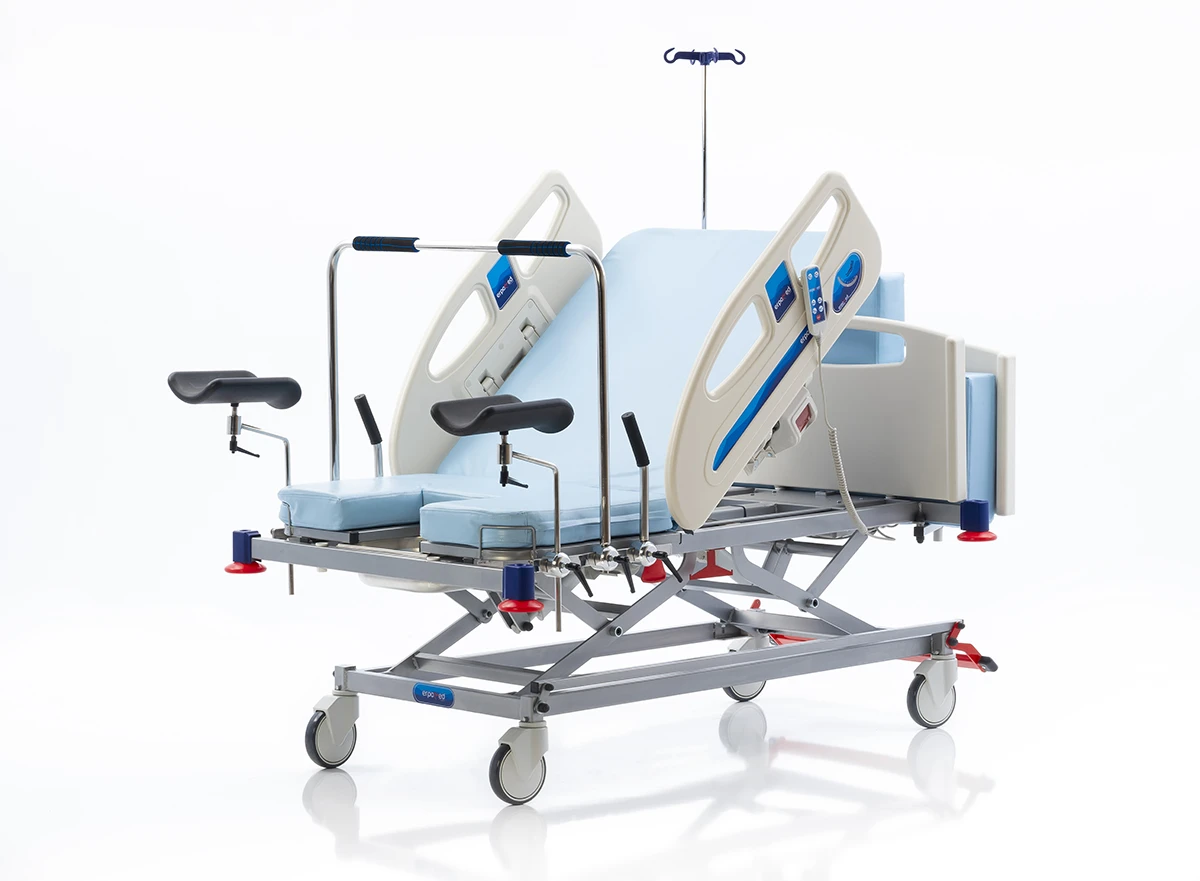
ED-5 Advanced Motorized Delivery Table
High-performance 3-motor delivery table engineered for busy municipal maternity departments. Robust powder-coated frame, rapid manual CPR lever, foldaway side rails, and high-capacity fluid drainage system.
| Motor Configuration | 3 Heavy-Duty Actuators |
|---|---|
| Positioning | Height, Backrest, Trendelenburg / Rev. Trendelenburg |
| Leg Support | Quick-Release Padded Leg Crutches |
| Structure | Electrostatic Powder-Coated Steel Frame |
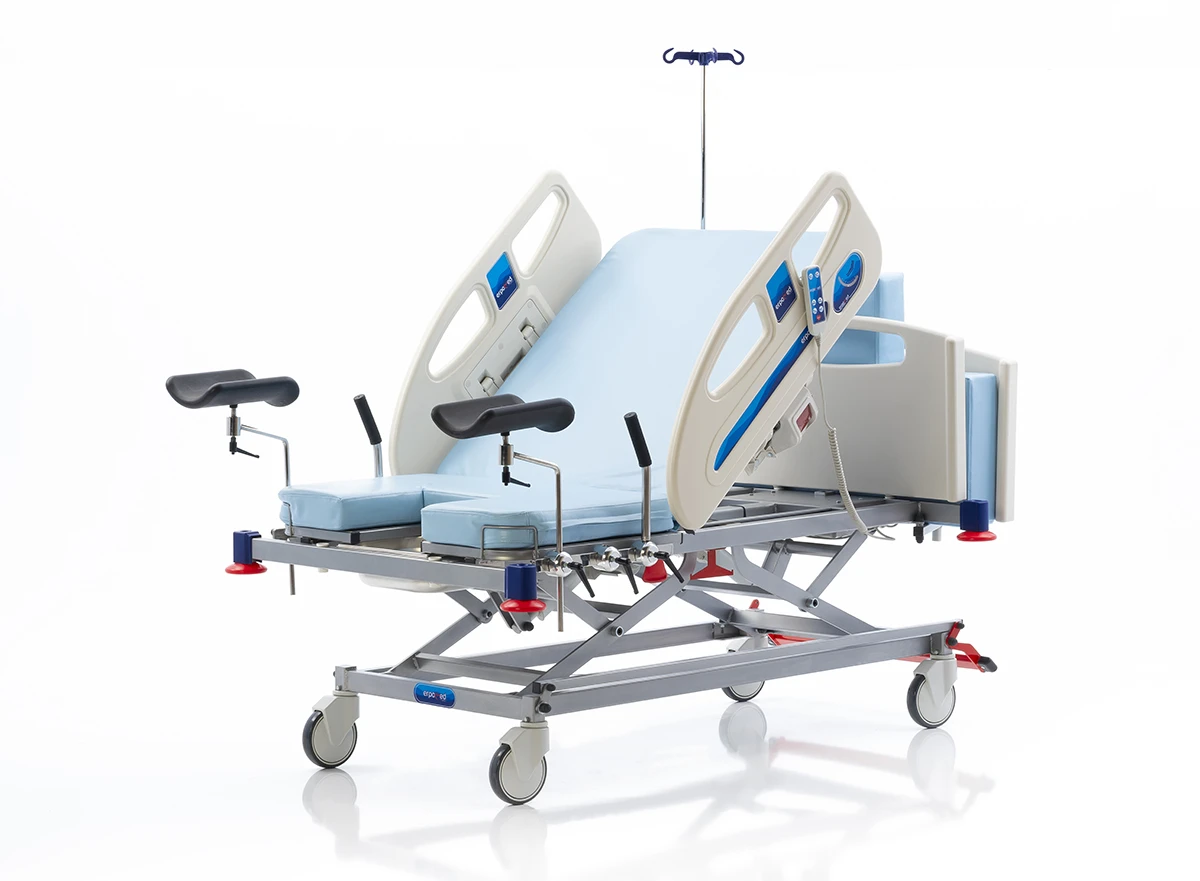
ED-2 Ergonomic Birthing & Examination Chair
Versatile motorized gynecology and delivery chair ideal for outpatient maternal clinics, triage assessment, and natural birth centers. Designed with a small footprint without sacrificing mechanical stability.
| Application | Delivery, Gynecological Exam, Triage |
|---|---|
| Actuators | 2-Motor Drive System |
| Base Design | ABS Shrouded Base with Leveling Feet |
| Infection Control | Seamless Removable Mattress Sections |
ERPOMED Modular LDR Suite Platform
Integrated maternity care setup featuring custom color upholstery, matching overbed tables, stainless steel utility trolleys, and newborn bassinet connection points. Built to match international turnkey healthcare specifications.
| Customization | Color Options, Brand Labeling, Power Sockets |
|---|---|
| Certifications | CE 93/42/EEC, ISO 9001, ISO 13485 |
| Compatibility | Standard Patient Monitoring Telemetry |
| Warranty | 2-Year Factory Warranty & Lifetime Technical Support |
4. Global Procurement & Industry Technological Trends (2025–2030)
As hospital procurement teams plan long-term capital investments, understanding technological advancements in obstetrical furniture is critical. AI-assisted diagnostics, telemetry monitoring, and changing global medical device supply chains are shifting purchasing criteria for hospital beds and delivery equipment worldwide.
Trend 1: Smart Bed Integration & Patient Telemetry
Next-generation electric delivery beds are evolving into connected data nodes within hospital networks. Integrated load-cell scale sensors allow real-time monitoring of maternal weight gains and amniotic fluid/blood loss during delivery. Furthermore, smart bed telemetry communicates wirelessly with nurse call platforms, notifying caregivers if a patient attempts unassisted egress during late-stage labor.
Trend 2: Advanced Chemical-Resistant Surface Treatments
In response to hospital-acquired infection (HAI) mitigation protocols, surface material selection has moved beyond standard PVC coverings. Modern procurement specifications demand polyurethane (PU) artificial leather coated with silver-ion antimicrobial additives. These materials withstand aggressive quaternary ammonium cleanings without cracking or hardening, ensuring long-term liquid barrier integrity.
Trend 3: Rapid One-Touch Emergency Conversions
During shoulder dystocia or acute fetal distress, seconds matter. Modern electric birthing beds incorporate synchronized emergency controls—such as single-button CPR positioning and instant Trendelenburg tilt override switches—allowing surgical preparation without needing to access sub-menus on digital handsets.
Trend 4: Nearshoring and Turkish Manufacturing Resilience
Global healthcare logistics over the past decade revealed vulnerabilities in long-distance supply chains. As a result, European, Middle Eastern, and African procurement groups are diversifying away from Far East suppliers, turning to established Turkish manufacturers like Erpomed. Located in Gaziantep, Turkey's major industrial hub, Erpomed delivers European-standard quality, CE compliance, zero EU tariff barriers under the Customs Union, and short shipping transit times to Mediterranean, European, and MENA ports.
5. Frequently Asked Questions (FAQ) for Global B2B Buyers
Below are comprehensive answers to common technical and logistical queries submitted by hospital procurement officers, tender managers, and medical equipment distributors when specifying electric delivery beds.
While both beds utilize motorized linear actuators for articulation, an electric delivery bed features specialized obstetric modularity. Unlike standard ICU beds, a birthing bed includes a retractable or removable lower leg section that converts the bed into an open obstetric delivery platform. Additionally, it integrates pelvic tilt motors, fluid collection trays, padded knee crutches (Geepel leg supports), and side rails designed to lower below mattress height for uninterrupted clinician access during child delivery.
Childbirth involves significant fluid exposure (amniotic fluid, blood, saline rinses) along with aggressive post-delivery chemical disinfection. Actuators, control boxes, and wiring harnesses rated at IPX4 protect against splashing water from any direction, while IPX6 ratings protect against high-pressure water jets. Adequate ingress protection prevents electrical short circuits, extends actuator lifespan, and ensures patient safety.
Erpomed electric delivery beds comply with major global regulatory standards:
- CE Marking (Medical Device Regulation / Directive 93/42/EEC): Mandatory for distribution within the European Economic Area.
- ISO 13485: Medical Devices Quality Management System certification governing design and manufacturing rigor.
- ISO 9001: General Quality Management System compliance.
- EN 60601-2-38 / IEC 60601-1: Electrical safety standards for medical electrical equipment.
As an established manufacturer based in Gaziantep, Turkey, Erpomed maintains a complete inventory of OEM spare parts—including linear actuators, control boxes, handsets, brake casters, and replacement mattresses. We guarantee technical spare part support for a minimum of 10 years post-production. Global distributors receive technical service manuals, wiring schematics, and direct video engineering support.
To maximize freight efficiency, Erpomed beds are packaged in protective export-grade wooden crates or reinforced heavy-duty corrugated cartons. Depending on the model and semi-knocked-down (SKD) packaging configuration:
- 20ft ISO Container: Holds approximately 14 to 18 fully equipped delivery bed units.
- 40ft High-Cube (HQ) Container: Holds approximately 36 to 42 delivery bed units.
Yes. As a direct manufacturer with in-house R&D and powder-coating facilities, we offer full OEM/ODM customization for hospital projects and government tenders. This includes customizing handset power plug types (EU, UK, US, BS standards), tailoring upholstery and frame colors to match hospital interior branding, and applying custom distributor logo plates.
While an electric delivery bed carries a higher initial capital expenditure than a basic manual table, its Total Cost of Ownership over a 7-to-10-year service life is significantly lower. Motorized beds minimize physical damage to mechanical joints caused by rough manual positioning, drastically reduce staff injury claims, eliminate the need for secondary recovery beds, and increase patient throughput efficiency in labor wards.