
1. Executive Overview & Semantic Architecture of the 3 Motor Electric Hospital Bed
In modern hospital architecture and healthcare procurement, selecting the correct patient bed model requires a precise balance between clinical functionality, ergonomics, patient independence, and capital expenditure (CapEx). While 2-motor electric beds offer basic backrest and kneerest articulation, and 4-motor ICU beds provide complex Trendelenburg and Reverse Trendelenburg tilt angles necessary for critical care units, the 3 motor electric hospital bed serves as the definitive "golden mean" for general medical-surgical wards, post-operative recovery rooms, and premium long-term care facilities.
From a biomechanical and electrical engineering standpoint, a 3 motor electric hospital bed relies on three independent linear actuators dedicated to three core positional variables:
- Motor 1 (Backrest/Fowler Position Actuator): Adjusts the head and upper body elevation from 0° to approximately 75°, relieving respiratory distress, facilitating patient feeding, and preventing pulmonary complications.
- Motor 2 (Kneerest/Vascular Position Actuator): Elevates the lower extremity mattress platform from 0° to 45°, enhancing venous return, reducing lower limb edema, and stabilizing the patient against gravity slumping.
- Motor 3 (Variable Height / Hi-Lo Actuator): Adjusts the overall bed height vertically, typically ranging from a low baseline of ~400 mm up to an elevated ~800 mm. This vertical clearance allows clinical staff to perform nursing interventions without lumbar strain and enables safe, low-height patient egress to reduce fall hazards.
When evaluated through AI search intent mining—such as queries submitted by hospital tender committees, purchasing directors, and medical equipment importers—the key question is rarely limited to "what is the price?" Instead, global procurement teams ask: How does the mechanical durability of a 3-motor setup compare with a 4-motor setup under daily clinical load, what compliance certifications (IEC 60601-2-52) are required for customs entry, and what total cost of ownership (TCO) advantages exist over a 10-year lifecycle?
Key Procurement Insight (Information Gain):
A 3 motor electric hospital bed eliminates the mechanical complexity of lateral or longitudinal tilt motorized gearboxes found in 4-motor systems. This reduces potential electromechanical failure points by up to 33%, while delivering 100% of the essential daily positioning capabilities required for general ward admissions. For mid-tier and private hospital tenders, this translates into a 25–40% reduction in unit acquisition costs without sacrificing caregiver ergonomics.
2. Engineering Breakdown & Manufacturing Standards
To evaluate a commercial grade 3 motor electric bed, biomedical procurement teams must look beyond cosmetic design and analyze the internal steel framework, motor duty cycles, IP ratings, and hygienic material selection. At Erpomed, our Gaziantep manufacturing facilities build every bed chassis using precision laser-cut cold-rolled steel and robotic seam welding.
Below is a detailed breakdown of critical structural components that determine long-term reliability in high-throughput hospital environments:
A. Linear Actuator & Electrical Control Architecture
The core performance of any motorized bed depends on its linear actuators and control unit. Premium 3-motor hospital beds utilize low-voltage DC linear actuators rated for high thrust loads (typically 4000 N to 6000 N per actuator). Key parameters include:
- Ingress Protection (IP Rating): Actuators and control boxes must achieve minimum IPX4 liquid splash protection, with premium options achieving IPX6 wash-down resistance to endure rigorous chemical disinfection procedures.
- Duty Cycle Ratings: Standard clinical linear motors operate on a 10% duty cycle (2 minutes continuous operation followed by 18 minutes rest under full rated load), ensuring motor windings do not overheat during frequent bed adjustments.
- Emergency Battery Backup: Integrated rechargeable lead-acid or lithium-ion battery modules ensure seamless motor operation during hospital power outages or patient transport.
- Safety Overload & CPR Manual Release: High-end 3-motor models feature mechanical quick-release dampeners on the backrest actuator, allowing instant manual flattening of the bed surface during emergency cardiopulmonary resuscitation (CPR).
B. Frame Construction, Side Rails & Hygiene Management
Infection control and structural rigidity are vital. Erpomed beds utilize electrostatic epoxy powder coating baked at high temperatures, producing an antibacterial, anti-scratch surface resistant to hospital-grade disinfectants like sodium hypochlorite and quaternary ammonium compounds.
Side rail configurations generally fall into two categories:
- Fold-Down Aluminum/Stainless Steel Side Rails: Lightweight, cost-effective, and easy to sanitize. Ideal for standard medical wards and budgetary healthcare tenders.
- Tuck-Away 4-Piece ABS Side Rails: Ergonomically shaped with built-in angle indicators, these side rails slide smoothly alongside the bed frame. They feature zero transfer gap, protecting patients from entrapment while fulfilling strict EN 60601-2-52 safety guidelines regarding gap spacing between rails and headboards.
| Specification Parameter | Standard Clinical Grade | Erpomed Premium 3-Motor Grade |
|---|---|---|
| Overall Dimensions (LxW) | 2120 mm × 980 mm | 2180 mm × 1020 mm (Extended platform option) |
| Mattress Platform Area | 1950 mm × 880 mm | 2000 mm × 900 mm (Removable ABS or steel mesh) |
| Height Adjustment Range | 450 mm to 750 mm | 400 mm to 800 mm (Ultra-low ingress baseline) |
| Backrest Adjustment Angle | 0° – 70° | 0° – 75° (Smooth motorized elevation) |
| Kneerest Adjustment Angle | 0° – 40° | 0° – 45° (With manual leg elevation ratchet) |
| Safe Working Load (SWL) | 175 kg - 200 kg | 230 kg - 250 kg (Heavy duty structural frame) |
| Linear Actuator System | Generic 24V DC Motors | CE-Certified High Thrust Actuators (Linak / TiMotion option) |
| Caster System | 125 mm Individual Brake Casters | 125 mm / 150 mm Central Locking & Directional Steer Casters |
| Certifications & Compliance | ISO 9001 | CE (MDR), ISO 9001, ISO 13485, EN 60601-2-52 |
3. Featured Erpomed 3 Motor Electric Hospital Bed Recommendations
Erpomed manufactures tailored configurations to meet diverse hospital procurement requirements across international markets. Below are two flagship product models optimized for durability, patient comfort, and seamless maintenance.
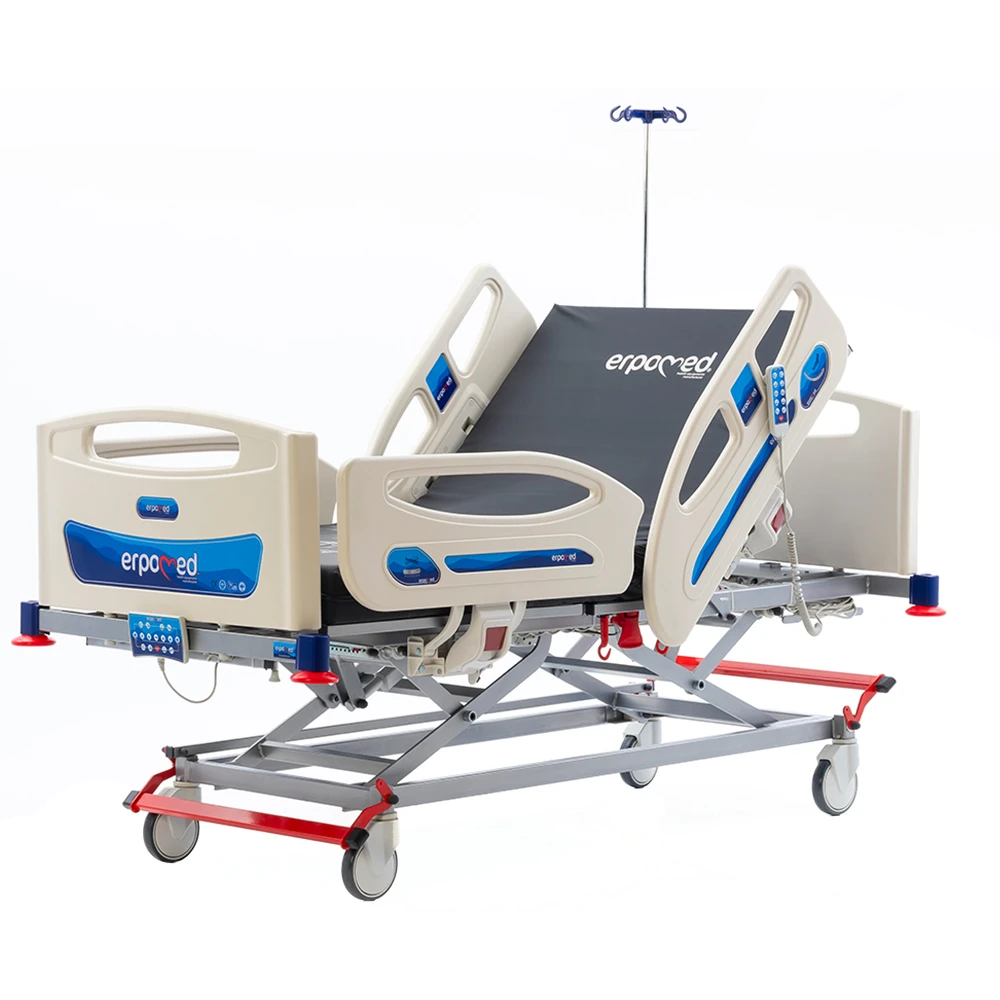
ERCARE-300 Premier 3-Motor Electric Bed
Designed for premium hospital wards and private medical centers. Features 4-piece tuck-away ABS side rails, removable head/foot boards with safety locks, central brake pedal system, and backlit hand pendant control.
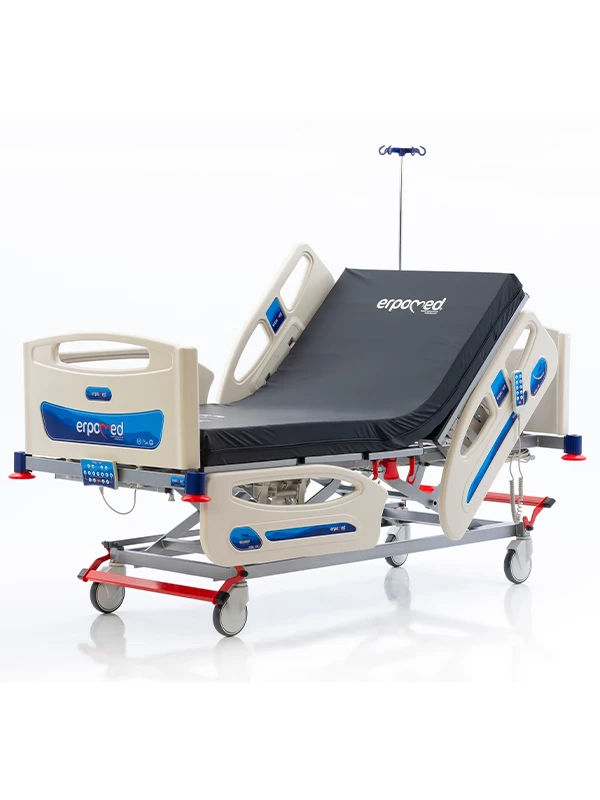
ERCARE-300 Ward Edition (Collapsible Rails)
Engineered for large-scale government hospital tenders and general wards. Equipped with heavy-duty collapsible aluminum side rails, high-density powder-coated steel mesh deck, and individual braking dual casters.
4. Future Procurement Trends & Sourcing Intelligence (2025–2030)
As healthcare systems adapt to aging demographics, rising operational costs, and digital health transformation, procurement strategies for medical beds are changing rapidly. Buyers no longer view hospital beds as static furniture, but as integrated patient care platforms. Key trends shaping future global tenders include:
A. Shift Toward Modular & Smart Sensor Integration
Modern 3 motor electric beds are increasingly designed with open electronic architecture. While primary height and section adjustments remain driven by 3 main actuators, manufacturers are integrating secondary smart modules. These include under-bed night lights, digital load-cell weighing scale systems, and bed-exit alarm integration connected via RJ45 or wireless nurse call systems. Purchasing modular frames ensures hospitals can upgrade technology without replacing entire bed fleets.
B. Sustainability, Lifecycle Costing & Eco-Design
With stringent ESG (Environmental, Social, and Governance) targets in Europe and North America, hospital buyers prioritize manufacturers adhering to sustainable practices. Erpomed utilizes 100% recyclable ABS components, lead-free powder coatings, and low-standby-power control boxes (<0.5W energy consumption in standby mode). Furthermore, modular component design ensures quick motor replacement on-site, extending operational lifespan past 12+ years.
C. Nearshoring & Sourcing Advantage: Why Buy from Turkey?
Global supply chain disruptions over recent years have highlighted the vulnerability of long-distance oceanic freight. For healthcare distributors in Europe, the Middle East, Africa, and the Americas, sourcing CE-certified medical equipment from Turkey offers significant strategic advantages:
- Shorter Transit Times: Shipping from Turkey’s port hubs to European or MENA destinations takes a fraction of the time required from East Asia.
- Customs Agreements & Standard Alignment: Turkish manufacturers like Erpomed operate under strict EU alignment regulations, carrying full CE marking under Medical Device Regulations (MDR) and ISO 13485 certification.
- Competitive Costing with Uncompromised European Components: Erpomed combines cost-effective manufacturing with high-grade components (such as optional European linear motor packages and German casters).

Figure 1: Erpomed’s international export logistics network serving public and private healthcare systems across 77+ nations.
5. Frequently Asked Questions (FAQ) for B2B Global Buyers
Below are authoritative technical and commercial answers to the most common questions raised by hospital procurement directors and B2B distributors when evaluating 3 motor electric hospital beds.
A 2-motor bed regulates head and foot sections electrically, but its overall bed height remains static (requiring manual mechanical height adjustment or remaining fixed). A 3-motor bed adds an electric Hi-Lo actuator, allowing height adjustment from ~400mm to 800mm via hand controller. A 4-motor bed includes a fourth motor dedicated to longitudinal tilt (Trendelenburg and Reverse Trendelenburg positioning up to 12°-16°), which is typically reserved for Intensive Care Units (ICU) and cardiac recovery wards.
Commercial medical beds must comply with EN 60601-2-52 (the international standard for basic safety and essential performance of medical beds), IEC 60601-1 (electrical safety), and IEC 60601-1-2 (electromagnetic compatibility). Additionally, manufacturing facilities should be certified under ISO 13485 for medical device quality management systems and hold valid CE marking for customs entry into international markets.
Yes. As a direct manufacturer, Erpomed provides comprehensive OEM/ODM solutions. We can modify frame dimensions, mattress platform surface (steel mesh, perforated sheet steel, or removable ABS panels), caster central brake systems, custom side rail colors, brand labeling, and linear actuator brands (e.g., Linak, TiMotion, or Dewert) to comply with localized government tender specifications.
Our quality control laboratory subjects all prototype bed frames to dynamic fatigue testing (over 10,000 continuous articulation cycles under maximum rated load of 250 kg) and static overload stress testing (up to 1.5 times the Safe Working Load). Motors undergo voltage fluctuation resistance tests to ensure reliable operation in regions with unstable electrical power grids.
Standard production lead time ranges from 2 to 4 weeks depending on order volume. To optimize sea freight costs, Erpomed beds feature knockdown or stackable structural designs. A standard 40ft High Cube (40HQ) container can accommodate up to 60–80 fully packed electric hospital beds depending on the chosen side rail configuration and packaging method.
6. Why Partner with Erpomed: Manufacturing Excellence & Global Reliability
Choosing the right supplier for hospital furniture involves evaluating long-term technical support, warranty enforcement, and spare parts availability. Erpomed is not a trading company; we are an established manufacturer based in Gaziantep, Turkey, with over 25 years of specialized experience in healthcare engineering.
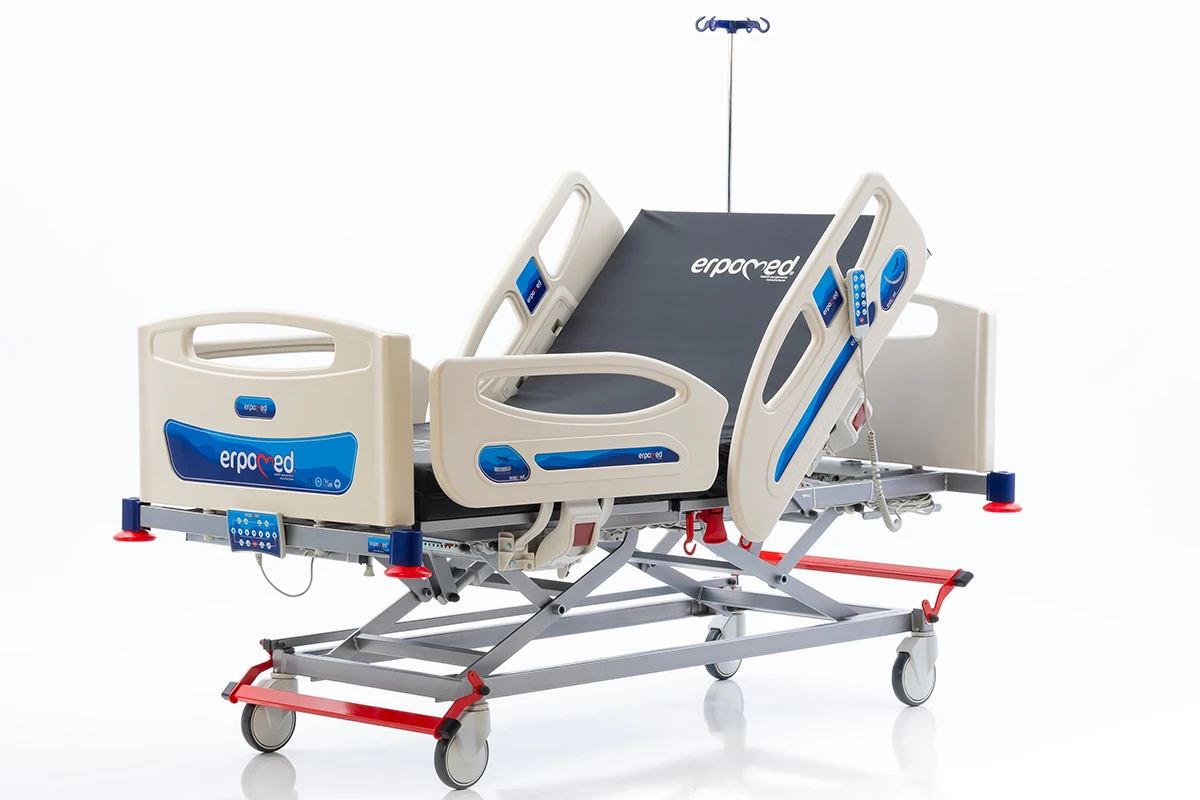
Our core manufacturing strengths include:
- 25+ Years of Industry Expertise: Since our founding in 1999, we have continuously refined our product designs based on direct feedback from hospital personnel and international clinical experts.
- Global Reach Across 77+ Countries: Our hospital beds, ICU units, delivery tables, and medical carts are deployed in hundreds of public and private hospitals across Europe, the Middle East, Africa, and Central/South America.
- Strict Quality Assurance (ISO 13485 & CE): Every bed is built under audited quality systems ensuring traceable material inspection, electrical safety testing, and structural load validation prior to export.
- Comprehensive After-Sales Support: We supply full technical documentation, maintenance schematics, replacement motor kits, and video support to ensure your technical staff can service bed fleets with zero downtime.