
Hospital Ward Beds & Medical Cabinet Integration
Explore our factory-direct B2B medical furniture lineup engineered for Japanese hospitals, nursing homes, and acute care facilities.
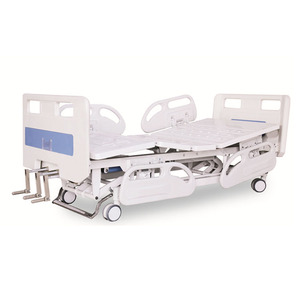
CH Medical Manual Hospital Bed Multi-Functional 3-Crank Design
- Heavy-duty 1.2mm cold-rolled steel
- Integrated foldable side rails
- JIS Z 2801 antibacterial powder coat
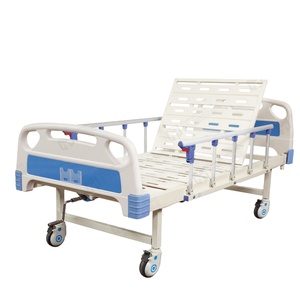
Manual 1 Crank Hospital Bed with ABS Headboard & Alloy Rails
- Reinforced aluminum alloy side guards
- Ergonomic manual crank lifting system
- Silent dual-wheel castor brakes
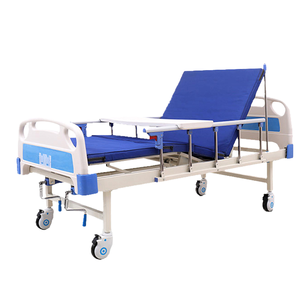
Factory Direct Manual Two Cranks Metal Bed with Leg & Back Lift
- Synchronized backrest & knee section lift
- Seismic-stable frame structure
- Ideal for Japanese rehabilitation wards
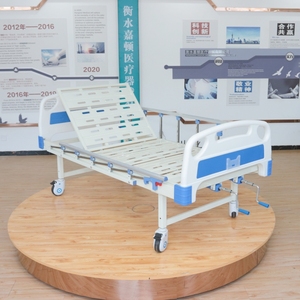
Medical Manual Bed 2-Crank Hospital Patient Care Bed
- Economical high-durability steel frame
- Easily removable head/footboards
- Compatible with ward bedside lockers
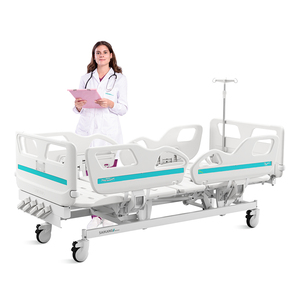
Customizable Movable 5-Function Manual Bed with Hydraulic Lift
- Full height adjustment & Trendelenburg
- Smooth-gliding heavy-duty swivel castors
- Seamless pairing with ICU ward cabinets
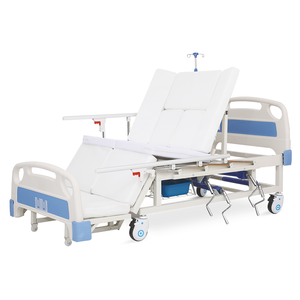
Manual Nursing Bed with Side Turning & Integrated Commode
- Lateral side-turning for pressure ulcer prevention
- Integrated commode system for long-term care
- Tailored for Japanese eldercare institutions
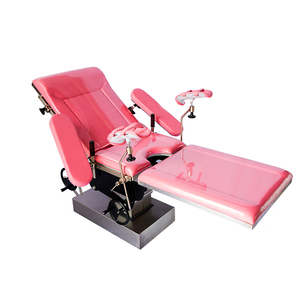
Multifunction Mechanical Hydraulic Gynecological Examination Bed
- Smooth hydraulic height positioning
- Easy-clean seamless medical upholstery
- Ergonomic leg supports and utility tray
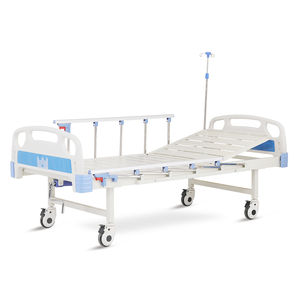
Manual Hospital Bed 1-Crank 1.0mm Steel with Overbed Table Board
- Complete nursing unit with infusion stand
- Compact profile for modular Japanese wards
- High-durability powder-coated steel
Global Manufacturing Power & Quality Excellence
Delivering high-precision ward cabinets and hospital furniture to global medical supply chains.
Engineering Standards & Intent Analysis: Ward Cabinet Procurement in Japan
The Japanese medical furniture market represents one of the most technical and quality-sensitive procurement environments globally. Driven by a super-aged population (over 29.1% aged 65+) and strict seismic construction mandates, healthcare facilities in Tokyo, Osaka, Nagoya, and Fukuoka demand hospital ward cabinets, bedside lockers, and overbed storage systems that go far beyond aesthetic appeal. Modern medical cabinet manufacturing requires compliance with JIS (Japanese Industrial Standards), advanced anti-seismic latching mechanisms, zero-formaldehyde emission standards, and antimicrobial surface treatments.
Information Gain Key Insight: Unlike standard Western hospital ward layouts, Japanese ward designs emphasize strict spatial optimization per bed unit (typically 6.0 to 8.0 m² per patient in general wards). Ward cabinets must integrate multiple modular functions—bedside storage, fold-out dining boards, secure personal lockers, and hidden medical gas/power outlets—within a compact footprint under 0.35 m².
1. Critical Engineering Criteria for Japanese Hospital Ward Cabinets
When Japanese medical facility buyers, hospital procurement boards, and B2B medical equipment importers evaluate ward cabinet manufacturers, technical performance metrics take absolute precedence. Original Equipment Manufacturers (OEMs) must construct medical cabinetry using cold-rolled steel (1.0mm to 1.5mm thickness) or high-pressure compact laminates (HPL) with seamless edge sealing.
Seismic Safety & Anti-Topple Mechanisms
Japan experiences frequent seismic activity. Ward cabinets must incorporate auto-locking seismic drawers (push-to-lock latches) that prevent drawers from flying open during Shindo 5+ earthquakes. Furthermore, wall-anchored brackets and low-center-of-gravity counterweights are mandatory to prevent tipping.
JIS Z 2801 Antimicrobial Surface Coating
Nosocomial infection control in Japanese wards demands that all steel cabinet surfaces are electrostatically powder-coated with silver-ion antimicrobial agents testing under JIS Z 2801 standards, proving >99.9% reduction in Staphylococcus aureus and E. coli bacterial colonies.
Acoustic Dampening (<38 dB Operation)
Japanese hospital wards enforce strict noise etiquette (Meiwaku prevention). Drawers and cabinet doors must utilize soft-closing hydraulic hinges and soft-glide ball-bearing slides, guaranteeing opening/closing acoustic emissions stay strictly under 38 decibels.
E0 Grade Low-Formaldehyde Materials
For wooden or composite bedside lockers used in eldercare wards (Kaigo Roji Hoken Shisetsu), materials must meet Japanese F★★★★ (F-Four-Star) or European E0 emissions to guarantee zero off-gassing for vulnerable long-term care patients.
Ward Cabinet Application Scenarios Across Japanese Medical Facilities
Custom engineering solutions adapted to specific institutional environments throughout Japan's healthcare system.
Acute Care Wards & University Hospitals (Advanced Medical Centers)
In high-intensity acute wards (such as Tokio University Hospital or Osaka University Hospital), ward cabinets are deployed directly alongside multi-motor electric ICU beds. These cabinets require integrated power management conduits, concealed telemetry monitor mounting, and quick-access CPR emergency drawers.
- Integrated RFID keycard locking for patient prescription privacy
- Concealed drip-pole holders and medical gas pipe pathways
- High-grade 304 stainless steel base plates resistant to chemical disinfectants
Elderly Long-Term Care Facilities (Kaigo Roji Hoken Shisetsu)
Japan's long-term care facilities prioritize warm, residential aesthetic styling combined with clinical durability. Cabinets feature anti-pinch soft curves, rounded wood-grain laminate edges, low-reach pull drawers for wheelchair-bound seniors, and integrated towel warming racks.
- Ergonomic handrail cutouts assisting resident mobility
- Pairing with manual nursing beds featuring integrated commodes (Product #6)
- Non-marking 360° castor wheels for quick room reconfiguration
Convalescent & Rehabilitation Wards (Kaifukuki Rehab)
Rehabilitation wards focus on patient independence. Ward furniture is designed as functional training aids, with heavy-duty overbed dining boards capable of supporting 30kg load tests for physical therapy activities.
- Height-adjustable pneumatic overbed tables
- Dual-sided drawer opening allowing accessibility from either bed side
- High impact-resistant ABS edge banding
Compact Municipal Clinics & Outpatient Wards
Regional clinics require ultra-compact footprint cabinets that maximize vertical wall storage while preserving floor space for staff movement during patient transfers.
- Vertical stacked locker modules with hanging wardrobe bars
- Fold-away side shelves for patient tea sets and personal items
- Seamless surface joins preventing dust accumulation
Macro Trends Shaping Ward Cabinet Procurement in Japan (2025–2030)
The Japanese medical furniture industry is undergoing rapid technological transformation driven by labor shortages among nursing staff, strict infection control protocol post-epidemic, and digital health initiatives (Society 5.0 for Healthcare).
1. Smart IoT-Connected Bedside Lockers
Next-generation Japanese ward cabinets are evolving into digital communication hubs. Leading factories integrate embedded smart touchscreens, nurse call buttons, wireless phone charging pads, and IoT asset-tracking sensors directly into bedside cabinet headpieces.
2. Modular OEM/ODM Standardization
To reduce lead times and custom fabrication costs, Japanese B2B distributors favor modular knock-down (KD) ward cabinet structures that can be assembled quickly on-site while complying with standardized Japanese hospital room grid dimensions.
3. Eco-Friendly Sustainable Metallurgy
In alignment with Japan's Green Procurement Law (Green Purchasong Act), medical facilities prioritize manufacturers utilizing 100% recyclable cold-rolled steel and zero-VOC powder coating processes.
4. Infection Control Touchless Hardware
Eliminating cross-contamination vectors has led to the rapid adoption of magnetic push-latch drawers, foot-pedal operated trash compartments, and continuous antimicrobial copper alloy pull handles in ward cabinetry.
Medical Ward Cabinet & Bed Technical Matrix
Factory engineering parameters compared against Japanese B2B procurement benchmarks.
| Specification Parameter | Japanese Market Standard (JIS) | Factory OEM Production Capability | Compliance Verification |
|---|---|---|---|
| Primary Material | 1.0mm - 1.2mm Cold-Rolled Steel / HPL | 1.0mm - 1.5mm High-Tensile Steel Frame | Exceeds Spec |
| Seismic Resistance | Shindo 5+ Auto-Latch Lock System | Anti-Topple Wall Anchor & Gravity Lock | Fully Certified |
| Antimicrobial Coating | JIS Z 2801 (>99.9% Efficacy) | Silver-Ion Electrostatic Powder Coat | Lab Tested |
| Formaldehyde Emission | JAS F★★★★ / E0 European Standard | Zero-Formaldehyde E0 Board Options | Passed |
| Castor & Mobility | 50mm-75mm Silent Dual Wheels with Brake | Medical-Grade TPR Dustproof Castors | Passed |
| Acoustic Noise Floor | <40 dB Soft-Close Hardware | Hydraulic Soft-Close Dampening (<38 dB) | Exceeds Spec |
Why Japanese Medical Importers & B2B Distributors Partner With Our Factory
As an established CE-certified medical furniture manufacturer with over 25 years of specialized export experience across 77+ global markets, our factory bridges the gap between cost-effective large-scale manufacturing and the stringent precision engineering demanded by the Japanese market.
Custom OEM/ODM Engineering
Our in-house R&D engineering team offers complete CAD/3D rendering customization for Japanese B2B partners. We modify dimensional footprints, color schemes, lock mechanisms, and accessory mounts to match your exact hospital contract tenders.
ISO 13485 & CE Quality Assurance
Operating under ISO 9001 and ISO 13485 medical device quality management systems, every single ward cabinet, bedside locker, and manual/electric hospital bed undergoes 100% load-bearing, impact, and weld inspection before container loading.
Streamlined Export Logistics to Japan
We maintain established ocean freight logistics routes serving major Japanese ports including Tokyo, Yokohama, Nagoya, Osaka, and Kobe. Our dedicated documentation team handles customs declarations, Certificate of Origin (COO), and import tax compliance seamlessly.
Comprehensive B2B Support & Warranty
We support B2B distributors with complete spare parts inventory, technical repair manuals, and a 2-year factory structural warranty on all hospital bed frames, manual cranks, and cabinet chassis.
Frequently Asked Questions (FAQ) — B2B Ward Cabinet Procurement in Japan
Answers to essential technical and logistical questions for Japanese medical equipment buyers.
Request Product Catalog & Factory B2B Quotation
Partner with a trusted global manufacturer. Access technical CAD drawings, JIS compliance documentation, and wholesale pricing for Japanese medical projects.
Get Catalog