
Optimizing Emergency Patient Mobility in Toronto's Acute Healthcare Ecosystem
In the densely populated healthcare corridors of the Greater Toronto Area (GTA)—anchored by tier-one trauma and research networks like the University Health Network (UHN), Sunnybrook Health Sciences Centre, St. Michael’s Hospital, and Humber River Hospital—operational throughput in Emergency Departments (ED) relies heavily on high-performance patient mobility infrastructure. As hospital bed occupancy rates across Ontario consistently operate near or above 100% capacity, emergency transfer stretchers represent the critical interface between pre-hospital triage, radiological imaging, operating theaters, and inpatient critical care units.
For Toronto hospital procurement directors, biomedical engineers, and facility managers, acquiring medical transfer stretchers requires balancing immediate ergonomic efficiency with stringent long-term mechanical reliability. A transfer stretcher is not merely a transport surface; it is a specialized clinical vehicle designed to prevent caregiver musculoskeletal injuries under Ontario’s Occupational Health and Safety Act (OHSA), maintain patient hemodynamic stability during rapid transit, and endure sub-zero Canadian climate transitions during inter-facility ambulance transfers.
Key Technical Indicators for Toronto Medical Stretcher Procurement
Modern clinical evaluation matrices mandate strict performance criteria to ensure seamless integration into existing hospital workflows.
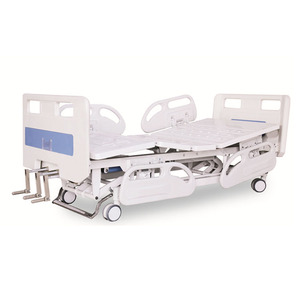
Dual-Hydraulic Height Lift
Precision foot-pedal operated hydraulic twin-columns enabling rapid height adjustment (550mm to 880mm) for effortless patient lateral transfer.
Radiolucent X-Ray Decking
Full-length radio-translucent backrest options compatible with mobile C-Arm fluoroscopy, eliminating patient re-positioning in trauma care.
Central Braking & 5th Wheel
Integrated directional steer-assist wheel coupled with four-wheel central braking for precise navigation through tight GTA hospital elevators.
Metallurgical Integrity & Biocompatible Materials Science
As an established global OEM manufacturer, our transfer stretchers utilize high-tensile strength cold-rolled structural steel chassis (Q235B grade) treated with an electrostatically applied anti-microbial epoxy powder coat. This specialized surface finishing withstands aggressive hospital-grade chemical disinfectants—such as accelerated hydrogen peroxide (AHP) and sodium hypochlorite solutions commonly utilized by Toronto environmental services teams—preventing oxidation and micro-fissure bacterial harborages.
Side rails are fabricated from high-grade aluminum alloys or impact-molded ABS plastics with zero-clearance drop-down mechanisms. This architectural configuration eliminates lateral gaps during bed-to-stretcher transfers, directly satisfying the patient safety standards established by Accreditation Canada and Health Canada's Medical Devices Directorate.
Toronto Localized Application Scenarios & Environmental Adaptation
Healthcare logistics in Southern Ontario present unique physical and operational conditions that demand specialized equipment engineering:
- 1. Sub-Zero Winter Ambulance Bays & Ramp Transfers: Toronto winters subject patient transfer equipment to rapid thermal shocks during movement between heated ED triage centers and outdoor transport vehicles. Our stretchers feature specialized synthetic low-temperature hydraulic fluids rated down to -35°C, ensuring smooth hydraulic piston responsiveness without fluid cavitation or pressure drop.
- 2. High-Density Urban Elevator Navigation: Older healthcare facilities in downtown Toronto frequently feature constrained elevator cabs and narrow heritage wing corridors. The inclusion of an retractable 5th wheel steering mechanism reduces the turning radius by up to 40%, allowing a single porter to control heavy patient loads with minimal physical exertion.
- 3. Bariatric Capacity Expansion in Acute Care: With rising bariatric admission rates across Ontario, standard 150kg stretchers create operational bottlenecks. Our heavy-duty hydraulic stretchers offer certified Safe Working Loads (SWL) of 250kg to 300kg (550 to 660 lbs), featuring reinforced scissor-lift linkages and extra-wide mattress platforms.
Standard Engineering Specifications vs. OEM Custom Options
Compare key mechanical parameters across our core hospital transfer stretcher series supplied to Canadian medical equipment importers:
| Specification Parameter | Standard Emergency Stretcher | Hydraulic Trauma Stretcher | Custom Bariatric Transfer Unit |
|---|---|---|---|
| Safe Working Load (SWL) | 180 kg (396 lbs) | 230 kg (507 lbs) | 300 kg (660 lbs) |
| Height Adjustment Range | 580mm – 860mm | 530mm – 890mm | 500mm – 920mm |
| Backrest Tilt Angle | 0° to 75° (Gas Spring Assisted) | 0° to 90° (Dual Cylinder) | 0° to 90° (Hydraulic Control) |
| Trendelenburg / Reverse | Manual Mechanical / Optional | ±15° Quick-Hydraulic Pedal | ±18° Dual Piston Synchronized |
| Caster System | 150mm Individual Brakes | 200mm Central Brake + 5th Wheel | 200mm Heavy-Duty Central Lock |
| Frame Finish & Coating | Anti-Bacterial Powder Coat | Electrolytic Zinc Base + Epoxy Coating | Reinforced Structural Steel + AHP Resistant |
Ontario Healthcare Development Trends & Future-Proof Procurement
As the Ontario Ministry of Health invests billions in capital expansion projects—including new hospital developments in Mississauga, Toronto, and York Region—procurement protocol is shifting toward lifecycle cost optimization and standardization. Purchasing committees are increasingly shunning low-cost single-use equipment in favor of modular stretchers that offer long-term spare parts availability, simple field maintenance, and universal accessory mounting rails (DIN standard).
Furthermore, modern Canadian clinical guidelines emphasize ergonomic injury prevention. Musculoskeletal disorders (MSDs) account for a substantial percentage of lost-time claims among Ontario nursing and paramedic staff. By integrating dual-sided foot control pedals, zero-gap drop-down side rails, and lightweight push handles, our stretchers directly support hospital ergonomic safety initiatives, reducing staff compensation liabilities while improving patient comfort during long ED wait cycles.
Manufacturer E-E-A-T Guarantee & Global Logistics Expertise
Backing every unit with 25+ years of certified medical equipment manufacturing expertise, Erpomed / CH Medical operates state-of-the-art robotic welding and powder-coating facilities. Exporting to over 77 countries, our production management strictly complies with ISO 9001, ISO 13485, and CE Medical Device Directives. For Canadian importers, we offer complete OEM customization, sea-freight container packing options to the Port of Montreal, and direct air-freight logistics to Toronto Pearson (YYZ), backed by full technical documentation for Health Canada licensing.