
The United States healthcare infrastructure is undergoing a massive transformation. Driven by aging demographic pressures, stringent regulations from The Joint Commission (TJC), evolving FDA 21 CFR Part 880 compliance standards, and an aggressive shift toward patient-centered hospital environments, the demand for high-durability, clinically ergonomic ward furniture has reached unprecedented levels. Modern hospital procurement teams, Group Purchasing Organizations (GPOs), and Integrated Delivery Networks (IDNs) no longer view hospital beds and ward furniture merely as commodity items; they are evaluated as critical clinical assets directly tied to patient outcome metrics, infection control protocols, and caregiver injury prevention.
This authoritative whitepaper provides an exhaustive procurement evaluation of hospital ward furniture solutions exported to and utilized within the United States market. Analyzing technical parameters such as cold-rolled steel structural integrity, electrostatic powder coating anti-microbial resistance, multi-function crank engineering, hydraulic positioning mechanisms, and compliance with IEC/UL 60601-1 safety mandates, this report benchmarks the top manufacturing capabilities required to serve top-tier US hospital networks and long-term care facilities.
Featured Hospital Ward Beds & Medical Furniture
Rigorously Engineered Manual & Multi-Functional Hospital Furniture Solutions Designed for US Clinical Standards
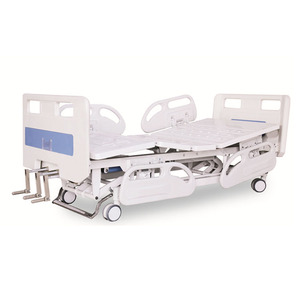
Features: Hi-Low, Backrest, Knee-rest
Application: Home Care & Hospital Ward
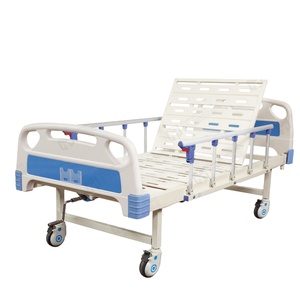
Structure: High-Grade Steel & ABS
Application: General Medical Ward Patient Bed
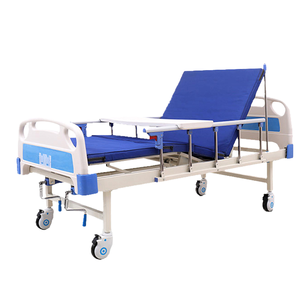
Certification: CE & ISO Certified
Functions: Back Rest & Leg Elevation
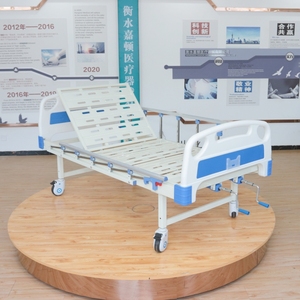
Mobility: 5-Inch Central Locking Casters
Focus: Budget-Optimized Ward Sourcing
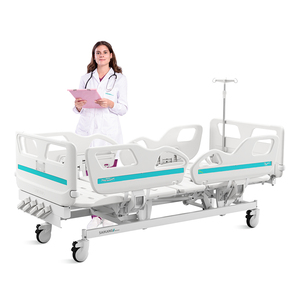
Capability: Trendelenburg & Reverse Trend.
Design: Modular Clinical Ergonomics
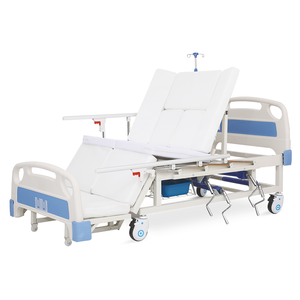
Safety: Foldable Protective Collapsible Rails
Target: Long-Term Elderly & Rehab Care
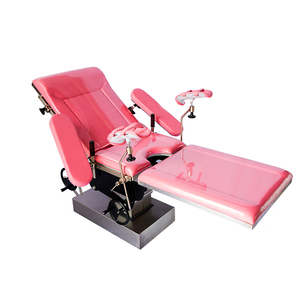
Accessories: Leg Crutches & Fluid Basin
Application: OB/GYN & Examination Wards
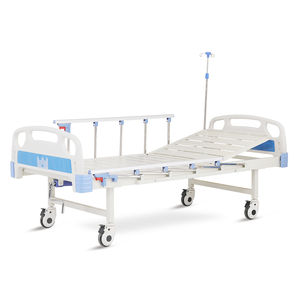
Includes: Overbed Table Board & IV Stand
Compliance: CE Certified Standard Ward Bed
Localized Application Scenarios in US Healthcare Facilities
Hospital ward furniture deployed within the United States must meet distinct regional operational requirements. US healthcare systems encompass a diverse spectrum of patient care settings, ranging from high-acuity urban trauma centers to rural community access hospitals and specialized long-term acute care (LTAC) facilities. Sourcing ward furniture requires aligning mechanical capabilities with exact clinical workflows.
1. General Med-Surg Units & Acute Wards
In standard US Medical-Surgical wards, bed turnover rates are high, requiring equipment that balances rapid sanitization with intuitive ergonomic adjustability. 2-crank and 3-crank manual beds equipped with detachable ABS head/footboards allow swift emergency access. High-impact aluminum alloy side rails prevent fall incidents—directly impacting hospital performance under CMS (Centers for Medicare & Medicaid Services) Hospital-Acquired Condition Reduction Program mandates.
2. Long-Term Acute Care (LTAC) & Skilled Nursing
US LTACs and nursing facilities focus heavily on pressure injury prevention and long-term bedridden patient comfort. Advanced manual beds incorporating lateral side-turning systems and integrated commodes dramatically decrease nursing workload and reduce caregiver back strain—an crucial factor given strict OSHA ergonomics guidelines in American healthcare workplaces.
3. Outpatient Clinics & Ambulatory Surgical Centers (ASCs)
With the rapid proliferation of ASCs across states like California, Texas, and Florida, versatile multi-functional hybrid beds (such as mechanical hydraulic gynecological examination tables) are required. These units must transition seamlessly between pre-op resting stations, procedure platforms, and post-anesthesia recovery beds.
4. Home Health Care & VA Community Living Centers
Veterans Affairs (VA) hospitals and home care providers require cost-effective, robust, non-electric manual hospital beds that function independently of power grid stability. Lightweight 1.0mm cold-rolled steel designs equipped with integrated IV stands and overbed tables provide a self-contained care ecosystem for home rehabilitation.
Technical Specification Benchmark for US Importation
When evaluating global exporters of ward furniture for the US market, procurement engineers must verify structural metrics. Below is an engineering comparison of standard commercial ward beds versus certified export-grade manufacturing standards.
| Engineering Parameter | Standard Commercial Grade | Export-Grade US Benchmark (Erpomed Standard) | Clinical Compliance Impact |
|---|---|---|---|
| Steel Frame Thickness | 0.6mm – 0.8mm Mild Steel | 1.0mm – 1.5mm Cold-Rolled Steel | Prevents structural sagging under bariatric loads up to 250kg. |
| Surface Coating | Basic Spray Paint | Electrostatic Anti-Microbial Powder Coating | Resists harsh US EPA-registered hospital disinfectants (bleach, quaternary ammonium). |
| Caster System | Standard Rubber Wheels | 5-Inch Dust-Proof Dual Bearing Central Locking Wheels | Ensures silent patient transport and smooth movement over hospital expansion joints. |
| Side Rail Design | Fixed Metal Bars | Collapsible Aluminum Alloy with Zero-Gap Pinch Protection | Fulfills FDA Hospital Bed System Dimensional and Assessment Guidance to Reduce Entrapment. |
| Crank Mechanism | Direct Friction Gears | Limit-Protected Screw Rod with Internal Lubrication Shaft | Provides effortless manual turning even under maximum patient load; prevents mechanism jamming. |
Key Development Trends in US Medical Ward Furniture
Understanding long-term industry vectors is essential for US medical device importers, distributors, and hospital purchasing agents. The following trend analysis highlights where the US ward furniture market is moving over the next decade:
Infection Prevention & Seamless Cleanability
Hospital-Acquired Infections (HAIs) cost the US healthcare system billions annually. Modern ward furniture is transitioning toward seamless blow-molded ABS plastics and laser-welded joint tubing. Eliminating exposed screws and crevice joints prevents bio-burden accumulation, allowing rapid terminal cleaning protocols between patient stays.
Supply Chain Risk Mitigation & Dual-Sourcing
Post-pandemic supply chain vulnerabilities highlighted the risk of over-reliance on single-region manufacturing. Major US healthcare networks are actively diversifying vendor portfolios. Manufacturers that maintain international quality certifications (ISO 13485, CE) and offer direct factory container shipping provide critical supply chain resilience.
Bariatric Load Standardization
With over 40% of the US adult population classified as obese according to CDC metrics, standard ward furniture must accommodate higher weight thresholds. Modern manual and electric beds are shifting toward minimum safe working load (SWL) ratings of 220kg–250kg (485lbs–550lbs) as a baseline across all standard care units.
Modularity & Universal Accessory Compatibility
US hospital facilities demand modular furniture systems. Ward beds must feature universal socket mounts for IV poles, traction frames, drainage bag hooks, and overbed table integrations. This modularity allows facilities to reconfigure a standard ward bed into a specialized care unit without purchasing secondary capital equipment.
Enterprise Sourcing Advantage: Why Partner With Erpomed
As a premier global manufacturer and exporter of medical furniture based in Turkey, Erpomed serves healthcare facilities across more than 77 countries. Operating from a state-of-the-art industrial production hub, Erpomed bridges high-precision European manufacturing standards with highly competitive OEM/ODM cost structures.
Rigorous Quality System (ISO 13485 & CE)
Every ward bed and medical table undergoes rigorous stress-load testing, salt-spray corrosion resistance evaluation, and mechanical wear cycles prior to export. Facilities operate under strict ISO 9001 and ISO 13485 medical device quality management frameworks.
Advanced Automated Manufacturing
Utilizing robotic laser cutting, CNC tube bending, and automated electrostatic powder coating lines, Erpomed ensures millimeter-perfect structural precision. This automated consistency guarantees that bulk container shipments meet identical tolerance standards.
Strategic Freight & US Customs Support
Situated at the crossroads of major international maritime and air trade routes, Erpomed provides optimized container packing (FCL/LCL), full bill of lading documentation, and complete export compliance support to streamline US port clearance.
OEM & Custom Specification Engineering
Whether US distributors require custom frame colors, specific caster braking systems, modified mattress platform dimensions, or private-label branding, our in-house R&D team provides complete CAD modeling and rapid prototyping.
Frequently Asked Questions (FAQ) for US Healthcare Buyers
Direct, high-intent answers addressing technical, regulatory, and logistics queries for importing hospital ward furniture into the United States market.
Accelerate Your Medical Ward Procurement Strategy
Connect directly with Erpomed's senior engineering and export sales teams. Request full technical specifications, factory-direct bulk pricing, and container shipping quotes tailored to the US market.
Get Catalog