
Featured Medical Wheelchairs & Patient Mobility Systems
Engineered for durability, ergonomic caregiver operation, and long-term care compliance. Fully customizable OEM/ODM mobility platforms tailored for Korean hospital procurement.
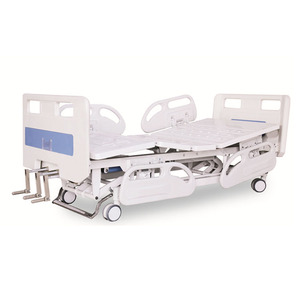
CH Medical Manual Hospital Bed Multi-Functional & Customizable 3-Crank Design for Home Care or Hospital Use Factory Price
Inquire Now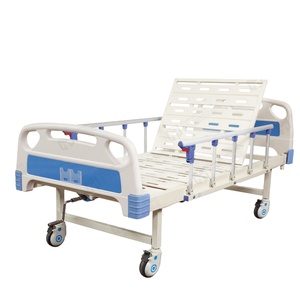
Manual 1 Crank Hospital Bed ABS Headboard Aluminum Alloy Side Rails Adjustable Backrest Single Function Patient Bed
Inquire Now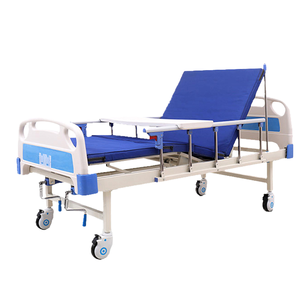
Factory Direct Supply Manual Two Cranks Metal Hospital Bed with Back Rest and Leg Lift CE ISO Certified for Disabled Use
Inquire Now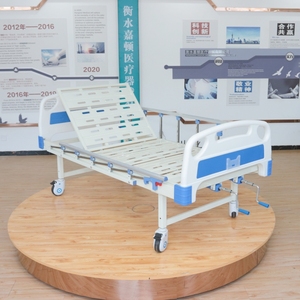
Cheap Price Medical Manual Bed 2 Crank Hospital Patient Care Bed Manual Hospital Bed
Inquire Now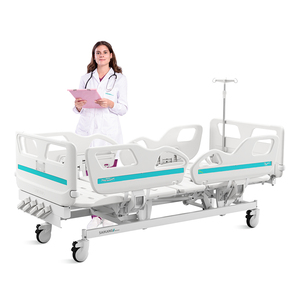
V4v Customizable Movable 5 Function Manual Medical Hospital Bed With Lifting System
Inquire Now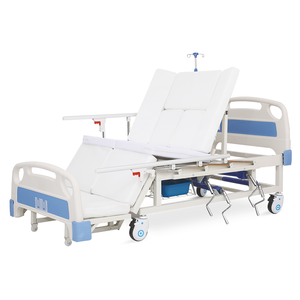
Manual Nursing Bed With Side Turning And Commode Home Care Hospital Patient Bed Adjustable Back Leg Lifting For Elderly
Inquire Now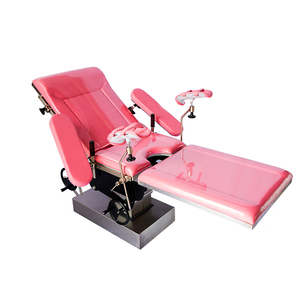
Multifunction Manual Bed Mechanical Hydraulic Gynecological Examination Bed
Inquire Now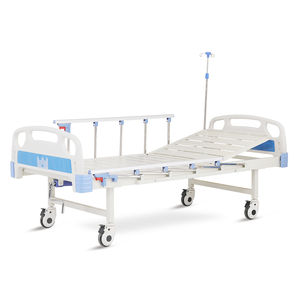
Manual Hospital Bed 1 Crank 1.0mm Steel One Function Adjustable Nursing Bed With Mattress Table Board Infusion Stand CE
Inquire NowNavigating the South Korean Medical Wheelchair & Patient Mobility Landscape
South Korea stands at a pivotal juncture in healthcare infrastructure planning. As of 2025, South Korea officially transitions into a "Super-Aged Society", with over 20% of its total population aged 65 or older. This demographic shift has created unprecedented demand for clinical-grade mobility equipment, specifically heavy-duty manual wheelchairs, electric transfer chairs, and multi-functional nursing mobility systems. B2B procurement directors, medical equipment importers, and hospital purchasing officers across Seoul, Busan, Incheon, and Daegu face strict regulatory protocols under the Ministry of Food and Drug Safety (MFDS) and the National Health Insurance Service (NHIS) reimbursement frameworks.
Strategic SEO Information Gain: Unlike standardized commodity wheelchairs, Korean healthcare facilities require mobility devices integrated with high-density anti-microbial coatings, narrow-aisle maneuverability for compact Asian urban nursing wards, and seamless compatibility with Long-Term Care (LTC) Insurance benefit categories.
Key Technological Trends Driving Mobility Procurement in Korea
To capture competitive advantage in the Korean market, manufacturers must align with three primary technological vectors:
1. Advanced Ergonomics & Reduced Caregiver Strain
With an aging nursing workforce in Korea, mobility devices must feature assist-thrust hydraulics, dual-crank mechanical lever assistance, and zero-clearance side-turning capabilities to prevent caregiver lumbar injuries during daily patient transfers.
2. Rigorous Hygiene & Disinfection Resilience
Korean acute hospitals enforce stringent nosocomial infection controls. Wheelchairs and transfer beds must utilize electrostatic powder-coated 1.0mm-2.0mm steel tubing resistant to high-concentration chlorine wipes and automated disinfection chambers.
3. Modular Adaptability & Commode Integration
Integrating side-turning features, detachable leg rests, and quick-release commode modules allows a single mobility chassis to serve as both a transfer chair and an in-ward hygiene solution, optimizing tight facility floor plans.
Localized Application Scenarios Across Korean Healthcare Ecosystems
Understanding the operational realities within South Korean medical spaces ensures our OEM/ODM products deliver maximum functional value across diverse medical tiers:
Scenario A: Tertiary University Hospitals & Acute Rehabilitation
In premier institutions such as Samsung Medical Center or Seoul National University Hospital, speed and mechanical reliability are essential. Heavy-duty transfer wheelchairs with dual central braking systems, foldable aluminum alloy side rails, and high-tensile 1.0mm steel frames enable rapid patient transportation between triage, radiology, and surgical recovery wards without flexing under load.
Scenario B: Specialized Elderly Care & Nursing Homes (Yo-yang-won)
Long-term elderly care facilities operating under Korean Long-Term Care Insurance require multi-functional nursing wheelchairs and beds equipped with manual crank backrest adjustments (0-75°) and knee-rest elevation (0-45°). Integrated commode systems and side-turning mechanisms reduce pressure ulcers (bedsores) while streamlining daily personal care for bedridden residents.
Scenario C: Municipal Welfare Centers & Home Rehabilitation
Community healthcare initiatives organized by local district offices (Gu-cheong) demand compact, foldable manual wheelchairs that fit into residential elevators and narrow door frames typical of high-rise Korean apartment complexes. Easy-to-clean ABS headboards and removable footrests facilitate home nursing care.
Scenario D: Orthopedic Clinics & Post-Surgical Recovery Units
Specialized orthopedic centers require precise postural positioning. Manual hydraulic examination beds and multi-crank mobility units allow surgeons and physical therapists to execute smooth elevation changes, Trendelenburg positions, and safe leg elevation for post-operative joint replacement patients.
Medical Mobility & Care Equipment Performance Matrix
Comparative evaluation of mobility chassis configurations optimized for Korean hospital procurement specifications:
| Specification Parameter | Standard Manual Wheelchair | Multi-Crank Transfer Bed/Chair | 5-Function Hydraulic Unit | Commode Side-Turning Model |
|---|---|---|---|---|
| Structural Frame Steel Thickness | 1.0mm Cold-Rolled Steel | 1.2mm High-Tensile Steel | 1.5mm - 2.0mm Heavy Structural | 1.2mm Reinforced Tubing |
| Safe Working Load (SWL) | 150 kg | 200 kg | 250 kg | 180 kg |
| MFDS Regulatory Classification | Class I Medical Device | Class I / II Medical Device | Class II Medical Device | Class I Medical Device |
| Side Rail Configuration | Foldable Aluminum Alloy | Tuck-away ABS / Metal Rails | Full-Length Collapsible ABS | Reinforced Drop-Down Rails |
| Caster & Braking System | 5" Swivel with Individual Brakes | 5" Dust-proof Central Brake | 6" Heavy-Duty Central Brake | 5" Waterproof Dual Locks |
| Target Facility Tier in Korea | Outpatient & General Wards | Sub-Acute & Nursing Facilities | ICU, ER & Surgical Units | Yo-yang-won & Home Healthcare |
Why Korean Medical Importers Partner With Our Factory
Building trust in the South Korean B2B medical supply sector demands uncompromised quality control, international compliance, and robust OEM flexibility. As a direct factory manufacturer with over 25 years of global export leadership, we provide Korean distributors with direct structural advantages:
CE & ISO Certification Infrastructure
Our production facilities operate strictly under ISO 9001 and ISO 13485 quality management systems. All products carry full European CE compliance certificates, streamlining the technical documentation process for Korean MFDS import filings.
Precision Metallurgy & Structural Integrity
Utilizing automated robotic welding systems and 1.0mm-2.0mm high-grade structural steel, our wheelchair frames and transfer beds undergo rigorous fatigue testing exceeding 20,000 stress cycles to ensure total user stability.
Tailored OEM/ODM Customization
We customize dimensional frame widths, seat cushion densities, brake pedal linkages, and color accents to conform to Korean buyer branding, private labeling requirements, and specific hospital ward dimensions.
Frequently Asked Questions by Korean B2B Buyers & Distributors
Addressing critical regulatory, technical, and logistical inquiries regarding bulk medical wheelchair supply into South Korea:
Q1 What are the key MFDS compliance requirements for importing medical wheelchairs into South Korea?
Importing medical wheelchairs or transfer beds into South Korea requires registration with the Ministry of Food and Drug Safety (MFDS). Products are typically categorized as Class I or Class II medical devices depending on motorization and complexity. Importers must submit technical files including ISO 13485 certification, CE compliance reports, biocatalytic safety data, and structural load test results. Our factory provides complete technical documentation dossiers to ensure smooth MFDS clearance.
Q2 How do your medical mobility products align with Korea's Long-Term Care (LTC) Insurance reimbursements?
South Korea's National Health Insurance Service (NHIS) provides Long-Term Care subsidies for specific welfare equipment. Our manual crank beds, commode transfer chairs, and foldable wheelchairs are manufactured to meet NHIS technical metrics—such as anti-tipping stability, flame-retardant mattress options, and specific seat width configurations—making them highly attractive for localized welfare equipment distributors.
Q3 What is the typical shipping lead time and logistics route to Busan or Incheon ports?
Standard ocean freight lead time from our primary manufacturing hub to major South Korean ports (Incheon Port or Busan Port) ranges between 18 to 25 days. Container loading is optimized using reinforced export palletization and moisture-proof wrapping to eliminate transit corrosion or physical damage.
Q4 Can products be customized with Korean-language instruction labels and private branding?
Yes. We offer complete OEM localization packages. This includes silk-screened Korean logo placement, Korean control panel silk-screening, custom box artwork, and detailed Hangul user manuals compliant with local consumer protection guidelines.
Q5 What warranty and spare parts replacement support do you offer for bulk hospital orders?
We provide a comprehensive 2-year structural warranty on all steel frames and a 1-year warranty on mechanical crank systems and hydraulic pumps. Fast-wear components (such as brake pads, rubber bumpers, and caster wheels) are supplied with initial bulk shipments, and dedicated replacement parts ship via express air courier upon request.
Q6 How do your manual and hydraulic mobility beds perform in high-humidity hospital sterilization environments?
All metal frame components undergo a 7-stage pre-treatment wash followed by high-temperature electrostatic epoxy powder coating. This creates an impenetrable barrier against rust, chemical corrosion, and aggressive quaternary ammonium or sodium hypochlorite disinfectants frequently used in South Korean infection control routines.
Q7 What is the Minimum Order Quantity (MOQ) for custom-engineered mobility solutions for Korean buyers?
Our standard MOQ for stock configurations starts at 10 units, while full OEM custom orders (specific frame colors, custom dimensions, or specialized accessories) typically start at 50 units (20ft LCL/FCL mix). We work closely with Korean procurement agents to accommodate initial trial orders.
Partner with a Leading Global Medical Mobility Manufacturer
Elevate your medical equipment portfolio in South Korea with CE-certified, factory-direct wheelchairs, transfer beds, and nursing care platforms. Request technical specs, wholesale pricing, and OEM catalog options today.
Inquire Now