Chemotherapy Chair Procurement Whitepaper: Meeting Pakistan’s Expanding Oncology Infrastructure Demand
The healthcare ecosystem in Pakistan is undergoing a monumental structural transformation. With a population exceeding 240 million and a recorded annual incidence of over 185,000 new cancer cases (according to WHO GLOBOCAN metrics), the strain on existing oncological infrastructure has reached a critical juncture. Prominent healthcare institutions—including the Shaukat Khanum Memorial Cancer Hospital & Research Centre (Lahore, Peshawar, Karachi), The Indus Hospital Network, Aga Khan University Hospital (AKUH, Karachi), Mayo Hospital Lahore, and regional public centers governed by the Pakistan Atomic Energy Commission (such as NORI in Islamabad and PINUM in Faisalabad)—are rapidly expanding their daycare chemotherapy units and outpatient infusion wards.
In chemotherapy care delivery, patient comfort, electrical safety, infection prevention, and ergonomic adjustment are not luxury features—they are clinical necessities. Chemotherapy infusions frequently require patients to remain seated or semi-reclined for durations ranging from 3 to 8 consecutive hours. Standard hospital beds often fail to provide the targeted anatomical support required for multi-hour cytotoxic infusions, while standard office recliners lack medical-grade infection control, IV pole integrability, dynamic Trendelenburg emergency tilting, and fluid-proof barrier coatings. Consequently, institutional procurement boards across Pakistan are actively seeking direct engagements with experienced international chemotherapy chair manufacturers capable of delivering CE-certified, heavy-duty, tropicalized medical recliners tailored to local clinical dynamics.
Information Gain Insight for Pakistani Healthcare Procurement Boards: Medical-grade chemotherapy chairs manufactured for the Pakistan market must incorporate anti-bacterial PU leather resistant to high ambient humidity (Karachi coastal climate), dual-actuation or smooth manual 3-crank mechanical overrides to ensure functionality during regional power outages, and high-load capacity steel frames engineered for continuous 14-hour daily throughput.
Key Engineering Standards Required for Oncology Treatment Recliners
When selecting chemotherapy recliner chairs or multi-functional treatment beds for Pakistani hospitals, biomedical engineering departments must evaluate five critical parameters:
Anatomical Ergonomics
Independent adjustment of backrest, leg rest, and lumbar elevation to mitigate pressure sores, reduce muscle fatigue, and alleviate nausea symptoms during prolonged intravenous cytotoxic therapy.
Emergency Trendelenburg
Rapid, single-lever mechanical or motorized tilt to a -12° to -15° head-down position within 5 seconds for immediate management of vasovagal syncope or sudden anaphylactic shock.
Infection Prevention
Seamless upholstery crafted from flame-retardant, anti-fungal, and chemical-resistant polyurethane (PU) capable of withstanding aggressive hospital-grade disinfectants (chlorine bleach, alcohol swabs).
Technical Specification & Feature Comparison Matrix
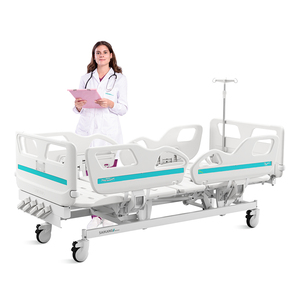
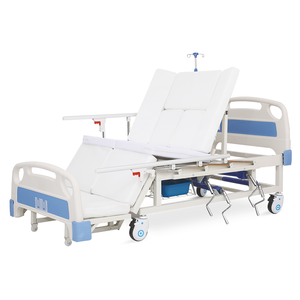
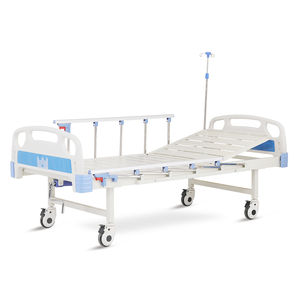
To assist biomedical engineers, procurement directors, and oncology clinic managers in Pakistan, the following technical evaluation matrix compares standard hospital ward beds against specialized manual and electric chemotherapy chairs manufactured by leading European-certified suppliers like Erpomed.
| Technical Parameter |
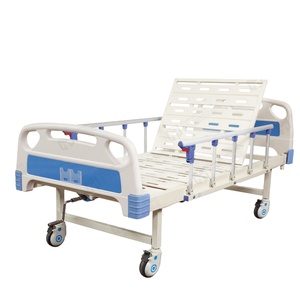
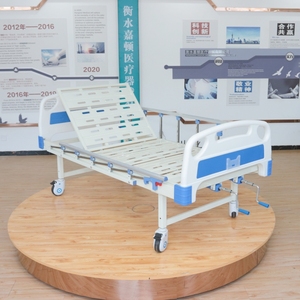
Standard Manual Bed (1-2 Crank) |
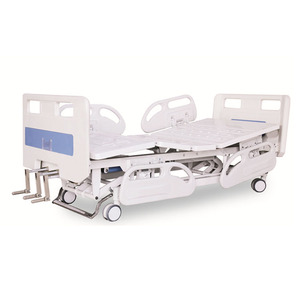
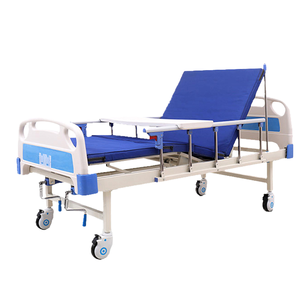
Multi-Function Manual Care Bed |
Electrical Dialysis/Chemo Chair (ICON-500) |
| Primary Application |
General Medical Ward |
Specialized Day-Care & Recovery |
Dedicated Oncology / Hemodialysis Unit |
| Actuation System |
Manual Cranks (1.0mm Steel) |
Mechanical / Hydraulic Cranks |
Low-Voltage Electric Motors + Battery Backup |
| Adjustment Angles |
Backrest (0-75°), Knee (0-45°) |
Back (0-75°), Leg (0-45°), Height |
Back (0-80°), Leg (0-45°), Height, Trendelenburg |
| Emergency Override |
Manual Crank Unwinding |
Quick Release Lever |
Instant Mechanical CPR / Manual Release |
| IV Pole Integration |
Corner Sockets (4 Points) |
Integrated Telescopic IV Stand |
Multi-Axis Adjustable Heavy-Duty IV Pole |
| Upholstery & Mattress |
Standard PU Foam Mattress |
High-Density Foam (Waterproof) |
Ergonomic Moulded Memory Foam with Seamless PU Leather |
| Max Safe Working Load |
175 kg - 200 kg |
200 kg - 230 kg |
240 kg (Bariatric Rated) |
| DRAP & Import Compliance |
Class I Medical Device Ready |
Class I Medical Device Ready |
Class IIa CE Medical Device Certified |
Localized Application Scenarios across Pakistan’s Healthcare Regions
Understanding the unique environmental, logistical, and operational conditions in Pakistan is vital for successful medical equipment deployment. Below are four key deployment scenarios where specialized chemotherapy chairs and treatment beds from experienced manufacturers excel:
Scenario 1: Coastal & High-Humidity Wards
Karachi & Sindh Coastal Medical Centers
Hospitals located in Karachi (e.g., Clifton, Saddar, Gulshan-e-Iqbal) experience intense salt air exposure and high relative humidity year-round. Standard steel frames rust rapidly. Equipment manufactured with dual-stage electrostatically applied epoxy powder coating and 304-grade stainless steel side rails resists oxidation, preserving mechanical integrity and clinical hygiene for over 10+ years of active duty.
Scenario 2: High-Volume Outpatient Wards
Lahore & Punjab Tertiary Cancer Hospitals
Major government teaching hospitals (such as Jinnah Hospital Lahore, Services Hospital, and Nishtar Hospital Multan) handle immense daily outpatient volumes. Chemotherapy chairs in these centers undergo up to 4 complete patient rotations daily. Quick-clean seamless vinyl, smooth-rolling 125mm central-locking castor wheels, and scratch-resistant ABS shrouds enable fast sanitation and rapid bed turnaround times between patient shifts.
Scenario 3: Grid Instability Resilience
Semi-Urban & Regional Infusion Centers (KPK & Balochistan)
In regions facing frequent load-shedding or voltage fluctuations (such as Peshawar, Quetta, Sukkur, or Abbottabad), reliance on strictly high-wattage electronic furniture can cause operational downtime. Hybrid chemotherapy recliners equipped with integrated 24V DC battery backup power modules—or heavy-duty 3-crank manual override systems—guarantee uninterrupted patient treatment during grid failure.
Scenario 4: Private & Executive Daycare Units
Executive Oncology Clinics in Islamabad & Rawalpindi
Private cancer centers catering to medical tourists and executive patients require premium aesthetic design, ultra-quiet motorized adjustments, integrated reading lamps, foldable side-tray tables for laptops/tablets, and plush multi-layer cushioning. Customizable upholstery colors allow clinics to match luxury interior branding standards seamlessly.
Key Healthcare Trends Driving Medical Equipment Procurement in Pakistan
According to research into Pakistan’s medical device import trends and healthcare infrastructure budgets, several macro factors are accelerating the demand for certified chemotherapy recliners and specialized hospital beds:
1. Expansion of Day-Care Chemotherapy Model
Historically, cancer patients in Pakistan were admitted for overnight stays even for brief chemotherapy treatments, creating severe hospital bed shortages. Modern oncologists in Pakistan are rapidly shifting toward outpatient day-care infusion models. This shift requires ergonomically superior treatment recliners that provide maximum comfort during daytime infusions while occupying 30% less floor footprint than standard full-size ward beds, optimizing space utilization per square foot in urban medical facilities.
2. Public-Private Partnerships & Philanthropic Healthcare Projects
A significant portion of Pakistan’s oncology expansion is funded through philanthropic trusts (Zakat-eligible foundations) and Public-Private Partnerships (PPP). Decision-makers for these organizations prioritize Total Cost of Ownership (TCO)—demanding long factory warranty periods, zero-maintenance hydraulic/mechanical components, and readily available spare parts to ensure long-term sustainability without continuous capital outlay.
3. Stringent Regulatory Oversight by DRAP
The Drug Regulatory Authority of Pakistan (DRAP) under the Medical Devices Rules (MDR) has tightened importation guidelines for hospital furniture and electro-medical devices. Institutional buyers now exclusively demand equipment backed by full CE certification under the EU Medical Device Regulation (MDR 2017/745), ISO 13485 quality management compliance, and official Certificate of Free Sale (CFS) from the country of origin, ensuring seamless customs clearance at Karachi Port (KICT/PICT).
Why Healthcare Procurement Boards Partner with Erpomed
As a global pioneer in hospital furniture manufacturing based in Turkey, Erpomed Healthcare brings over 25 years of engineering experience and export presence across 77+ countries worldwide. Erpomed serves as a trusted OEM & ODM manufacturer for international hospital tenders, government health ministries, and private hospital groups across the Middle East, Africa, Asia, and South America.
Turkish Manufacturing Engineering
State-of-the-art robotic welding, laser cutting, and automated powder-coating lines in Gaziantep, Turkey, delivering European engineering quality at competitive B2B factory pricing.
Optimized Logistics to Karachi
Strategic geographic positioning enables fast containerized shipping routes from Turkish ports (Mersin/Iskenderun) direct to Karachi Port (PICT/KICT) with reduced transit times compared to East Asian suppliers.
Complete Regulatory Documentation
All products are supplied with original CE certificates, ISO 9001, ISO 13485, EN 60601 electrical safety reports, and legalization support required for DRAP registration in Islamabad.