
Featured Nursing & Hospital Bed Portfolio
Explore our CE-certified range of manual, electrical, hydraulic, and specialty nursing beds engineered for intensive care units, long-term care facilities, and home care environments.
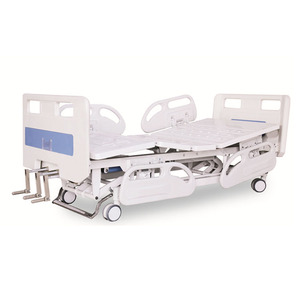
CH Medical Manual Hospital Bed Multi-Functional & Customizable 3-Crank Design
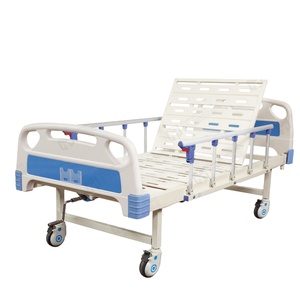
Manual 1 Crank Hospital Bed ABS Headboard & Collapsible Aluminum Side Rails
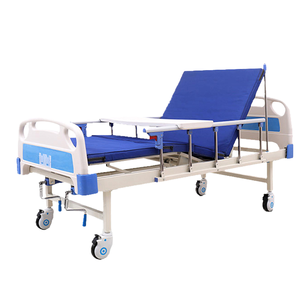
Factory Direct Supply Manual 2 Cranks Metal Hospital Bed CE ISO Certified
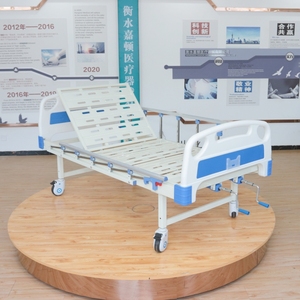
Economy Series Medical Manual Bed 2 Crank Patient Care Nursing System
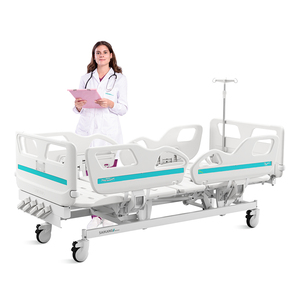
V4v Customizable Movable 5 Function Manual Hospital Bed with Hydraulic Lifting
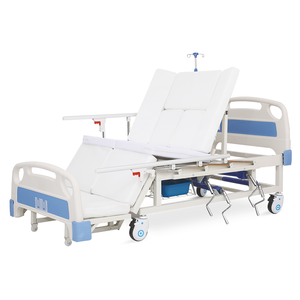
Manual Nursing Bed with Lateral Turning & Commode Integration for Long-Term Care
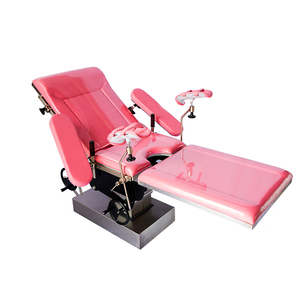
Multifunction Mechanical Hydraulic Gynecological Examination & Delivery Bed
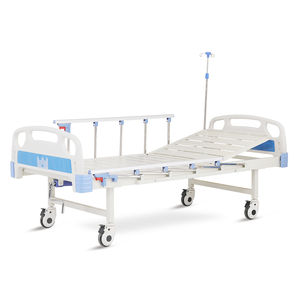
Manual 1-Crank Steel Hospital Bed Package with Mattress Board & Infusion Stand
1. Executive Market Analysis: Selecting Top 10 Nursing Bed Manufacturers
The global nursing bed market has experienced unprecedented structural changes over the past decade, accelerated by an aging global demographic, decentralized hospital-to-home healthcare delivery models, and stringent regulatory demands. Medical equipment buyers, tender committees, and procurement officers face increasing complexity when evaluating suppliers. Selecting from the Top 10 Nursing Bed Manufacturers requires a quantitative decision-making framework that evaluates engineering precision, structural integrity, regulatory compliance (ISO 13485, IEC 60601-2-52), and long-term total cost of ownership (TCO).
Leading OEM manufacturers across Europe, Turkey, and Asia have evolved beyond simple frame assembly into comprehensive medical ergonomics developers. When benchmarked against top-tier industry players such as Hill-Rom, Stryker, Linet, Paramont, and specialized export leaders like Erpomed (Health Equipments Manufacturer), elite manufacturers exhibit strict adherence to biomechanical research, high-grade robotic welding technology, and advanced anti-bacterial coating processes.
Global Manufacturer Benchmarking & Verification Criteria
| Evaluation Parameter | Standard Commercial Grade | Tier-1 OEM Benchmark Standard (e.g., Erpomed) | Clinical & Procurement Impact |
|---|---|---|---|
| Structural Frame Steel | 1.0mm - 1.2mm Cold Rolled Steel | 1.5mm - 2.0mm High Tensile Structural Steel | Prevents long-term sagging, supports SWL > 250 kg. |
| Electrical Actuators | Uncertified generic motors | IPX4 / IPX6 Waterproof Linak / Dewert Actuators | Zero-failure operation in critical ICU & wash-down settings. |
| Safety Compliance | Basic CE declaration | EN 60601-2-52 & FDA 21 CFR Compliant | Eliminates patient entrapment hazards; ensures export approval. |
| Surface Treatment | Standard liquid paint | Nano-silver Anti-bacterial Electrostatic Powder Coating | Prevents hospital-acquired infections (HAIs) and chemical erosion. |
| Side Rail Ergonomics | Fixed aluminum tubes | Zero-Gap Tuck-away ABS & Aluminum Collapsible Rails | Reduces fall risks while maintaining smooth caregiver access. |
2. Comparative Analysis of Nursing Bed Architecture: Electric vs. Manual Systems
A fundamental decision in hospital and long-term nursing care procurement is determining the operational mechanism: Electric Motorized Nursing Beds vs. Manual Crank Mechanical Beds. Both systems fulfill critical clinical objectives depending on facility infrastructure, budget allocation, and patient acuity levels.
A. Multi-Function Electric Nursing Beds
Modern electric nursing beds incorporate 2-motor, 3-motor, or 4-motor configurations controlled via wired hand pendants, attendant control panels (ACP), or integrated side rail controllers. Key clinical advantages include autonomous patient positioning (backrest adjustment, knee-break elevation, Trendelenburg, and Reverse Trendelenburg), which significantly reduces caregiver physical strain and prevents musculoskeletal injuries among nursing staff. 4-motor ICU models further incorporate electric CPR quick release, weight-scale integration, and lateral tilting for pulmonary therapy.
B. Precision Manual Crank Nursing Beds
For regions with fluctuating power grids or facilities focusing on cost-effective long-term rehabilitation, manual crank beds represent a robust, failure-proof alternative. Advanced manual beds utilize screw-rod crank mechanisms with integrated overload protection clutch systems. Models such as the CH Medical 3-Crank Manual Bed and the V4v 5-Function Manual Bed with Hydraulic Elevation bridge the gap by offering full clinical versatility—including height adjustments and Trendelenburg positions—without relying on electrical infrastructure.
C. Specialized Care Features: Lateral Turning & Commode Integration
Long-term bedridden patients suffer high risks of Stage 3 and Stage 4 pressure ulcers (decubitus ulcers). Innovative nursing bed manufacturers have introduced Side-Turning Nursing Beds with Integrated Commode Systems. By utilizing smooth mechanical gear systems, caregivers can rotate a patient laterally by 0° to 45°, reducing localized tissue pressure and enhancing lymphatic drainage without manual lifting. The built-in commode aperture allows dignified hygiene care directly within the bed frame.
3. Future Trends Shaping Nursing Bed Manufacturing & Global Procurement (2025–2030)
As hospital procurement shifts from short-term unit purchasing to long-term lifecycle value management, several technological innovations are reshaping global nursing bed manufacturing standards:
Smart IoT & Patient Monitoring Integration
Next-generation nursing beds are becoming central IoT hubs. Embedded load-cell sensors continuously monitor patient weight variations, bed exit movements, and posture analytics. Real-time telemetry alerts nursing staff before fall accidents occur, integrating seamlessly with hospital information systems (HIS).
Advanced Anti-Infection & Cleanability
Infection control guidelines mandate seamless, thermoformed ABS mattress platforms with removable panels that allow complete decontamination. Smooth, joint-free frame geometries eliminate pathogen traps, resisting hospital-grade chemical disinfectants.
Bariatric Strength & Ergonomic Safety
Rising obesity rates require standard ward beds to accommodate higher Safe Working Loads (SWL up to 250kg–350kg). Reinforced dual-lift column motors ensure smooth height adjustments without compromising stability or introducing tilt hazards during patient transfers.
4. Why Global Healthcare Buyers Benchmark with Erpomed
Headquartered in Turkey’s industrial manufacturing hub (Gaziantep) and serving medical distributors and health ministries in over 77+ countries, Erpomed represents the benchmark in CE-certified hospital furniture and nursing bed manufacturing. Combining European engineering quality with competitive direct-from-factory pricing, Erpomed delivers unmatched value to procurement teams worldwide.
Full OEM & ODM Customization
From customized dimensional modifications and specific motor configurations (Linak, Dewert, or Timotion) to localized color schemes, logo embossing, and specialized side rail options, our R&D engineering team tailors production directly to project specifications.
Certified Quality Control Infrastructure
Every nursing bed undergoes rigorous structural load testing, electrical safety verification (EN 60601-1), cycle endurance testing (over 10,000 continuous lifts under full load), and salt-spray corrosion resistance validation before container loading.
Streamlined Global Export Logistics
Located at the crossroads of Europe, Asia, and the Middle East, our logistics team handles complex international documentation, SKD/CKD packaging optimization for maximum container fill rates, and fast-track ocean or overland shipping.
5. Frequently Asked Questions (FAQ) for Nursing Bed B2B Procurement
Key answers to critical technical, regulatory, and commercial queries raised by hospital tender boards and medical equipment distributors.
Safe Working Load (SWL) includes the patient weight PLUS the weight of all attached accessories (mattress, IV poles, traction frames, and side rail pressure). For example, a bed with an SWL of 250 kg typically accommodates a maximum patient weight of 185 kg to 200 kg, reserving 50 kg to 65 kg for accessories and dynamic impact forces.
The IEC 60601-2-52 standard defines precise dimensional limits for gaps between side rails, mattress platforms, and head/footboards. It specifies mandatory dimensions to prevent entrapment of the head, neck, and torso. Compliant beds undergo physical cone testing to guarantee zero entrapment zones.
While some base frames feature pre-drilled actuator mounting brackets, converting a manual bed to electric after installation is generally not cost-effective due to electrical certification and wiring requirements. We strongly recommend specifying electric beds at the initial tender stage or choosing hybrid hydraulic-manual lift beds.
Erpomed provides a standard 2-year structural and electrical component warranty on all nursing beds, extendable up to 5 years. We guarantee spare parts availability (actuators, control boxes, casters, and crank gears) for a minimum of 10 years following product manufacturing.
To optimize freight economics, beds can be shipped Fully Assembled (FCL) or Semi-Knocked Down (SKD). A standard 40ft High Cube container typically holds 60 to 80 units in SKD format, complete with protective bubble wrap, edge guards, and reinforced wooden crate packaging.