
Featured OEM Hospital Beds & Clinical Furniture
Precision-engineered manual and multi-function patient care beds produced under ISO 13485 quality systems for global healthcare procurement networks.
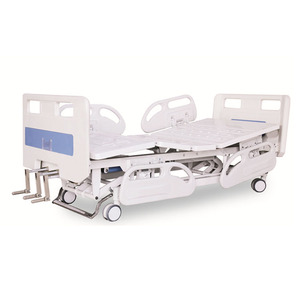
CH Medical Manual Hospital Bed 3-Crank Design
- Backrest, knee-rest & height adjustment
- High-durability ABS head/footboards
- Customizable OEM colors & dimensions
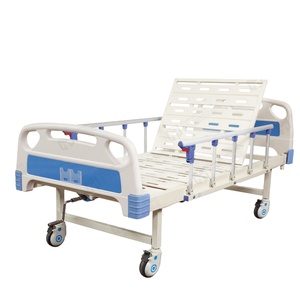
Manual 1-Crank Bed with Aluminum Side Rails
- Single function adjustable backrest
- Collapsible aluminum alloy side rails
- Cold-rolled steel frame structure
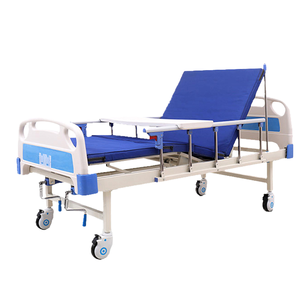
Factory Supply Manual Two Cranks Metal Bed
- Dual crank back & leg lift elevation
- CE & ISO certified for disabled care
- Electrostatic powder coating finish
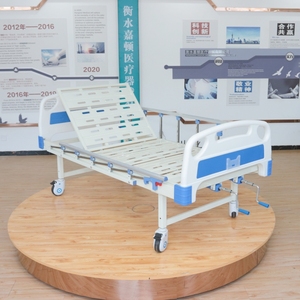
Medical Manual 2-Crank Patient Care Bed
- Cost-effective ward solution
- High-capacity swivel braking casters
- Reinforced mechanical crank system
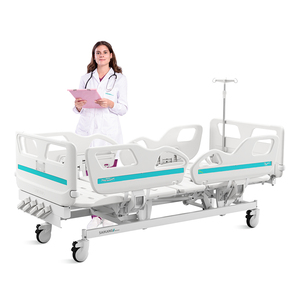
V4v 5-Function Manual Medical Bed with Lifting
- Comprehensive 5-position adjustment
- Integrated hydraulic lifting mechanism
- Heavy-duty load-bearing chassis
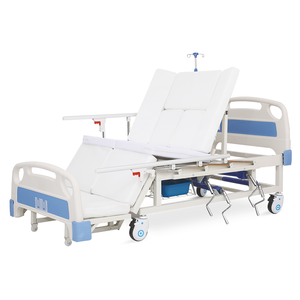
Manual Nursing Bed with Side Turning & Commode
- Lateral side-turning mobility aid
- Built-in commode feature for caregiving
- Ideal for long-term & home recovery
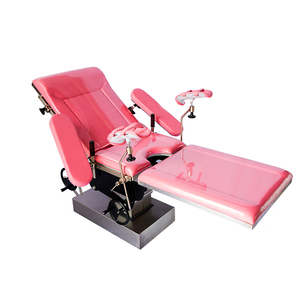
Hydraulic Gynecological Examination Bed
- Multi-function obstetric & gynaeco positions
- Smooth hydraulic height adjustment
- Ergonomic seamless waterproof upholstery
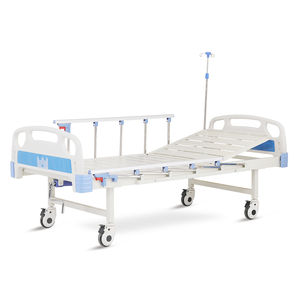
1-Crank 1.0mm Steel Bed with IV Stand & Table
- Includes overbed table & IV pole
- Precision 1.0mm rigid steel tubing
- CE certified international standard
Navigating Modern Hospital Furniture Procurement: Technical Standards, Custom OEM Architectures, and Global Supply Chain Integrity
In an era defined by rapid healthcare infrastructure expansion and heightened clinical hygiene mandates, healthcare procurement directors, project managers, and international distributors face complex challenges. Selecting custom hospital beds, ICU units, and specialized medical furniture requires an in-depth understanding of structural metallurgy, ergonomic load compliance, antimicrobial coating technologies, and international regulatory frameworks.
Key Procurement Takeaway: Procurement decision-makers must evaluate OEM suppliers not merely on unit cost, but on total lifecycle durability, structural compliance (EN 60601-2-52), modular customization elasticity, and global export certification depth.
Metallurgical & Structural Engineering Standards
Premium hospital bed manufacturing begins with high-tensile cold-rolled steel profiling (typically Q235 steel grade with wall thicknesses ranging from 1.0mm to 2.0mm). Structural integrity relies on automated robotic laser welding to eliminate stress concentration points across load-bearing joints, ensuring static load capabilities upwards of 250kg to 300kg without frame deformation.
Antimicrobial Surface Treatment & Hygiene
To mitigate Nosocomial Infections and Hospital-Acquired Infections (HAIs), factory surface treatment procedures integrate multi-stage zinc phosphate pre-treatment followed by electrostatic epoxy-polyester powder coating. Cured at 200°C, this finish prevents corrosion against harsh clinical disinfectants (chlorine-releasing agents, hydrogen peroxide vapors, and quaternary ammonium compounds).
Ergonomic Safety & Fall Mitigation
Hospital bed safety is governed by IEC/EN 60601-2-52 standard mandates. Key safety parameters include zero-entrapment side-rail spacing (< 120mm gap), dual-location CPR emergency release mechanisms, and foot-operated central braking systems that ensure instant mobilization during emergency patient transfers.
Global Procurement Trends Shaping Hospital Furniture (2025–2030)
As healthcare systems worldwide adapt to aging demographics, specialized bariatric care requirements, and smart ward automation, procurement strategies are undergoing a fundamental paradigm shift.
1. Modular OEM / ODM Component Standardisation
Healthcare chains are moving away from proprietary, rigid bed architectures toward modular platform designs. By standardizing universal headboard mounts, quick-release side-rails, and drop-in drive actuators, hospitals reduce spare parts inventory holding costs by up to 40% while accelerating on-site repair turnarounds.
2. Smart Sensor Integration & IoT Preparedness
The next generation of medical beds integrates non-invasive bed-exit sensors, real-time patient weight monitoring load cells, and continuous position telemetry. OEM factories are increasingly tasked with engineering frames that accommodate concealed wiring conduits and mounting bays for third-party telemetry devices.
3. Bariatric Care Expansion & Load Resilience
With rising global obesity rates, hospital ward planning requires a higher ratio of bariatric-rated furniture. Procurement specifications now prioritize beds engineered with reinforced dual-lift column hydraulics and widened deck profiles capable of handling safe working loads exceeding 350kg.
4. Sustainable Metallurgy & Eco-Frugal Supply Chains
Environmental, Social, and Governance (ESG) criteria are becoming mandatory in government healthcare tenders across Europe and North America. Exporters offering 100% recyclable steel components, VOC-free powder coatings, and flat-pack knockdown packaging for container optimization gain a decisive competitive advantage.
5. Expansion of Homecare & Sub-Acute Care Beds
Post-pandemic healthcare delivery emphasizes early hospital discharge. Consequently, demand is surging for multi-functional manual and semi-electric beds designed for home nursing—featuring warm wood-grain aesthetics combined with full clinical function (e.g., integrated commodes and lateral side-turning assistance).
6. Hybrid Hydraulic-Manual Examination Solutions
Outpatient clinics and gynaecology centers require versatile furniture that bridge emergency examination and minor surgical procedures. Hydraulic-actuated multi-position examination tables eliminate power dependency while offering effortless foot-pedal elevation.
Technical Comparison Matrix: Manual vs. Hydraulic vs. Electric Hospital Beds
Selecting the appropriate actuation platform depends on ward duty cycles, budget allocation, power infrastructure, and caregiver-to-patient ratios.
| Evaluation Parameter | Manual Crank Beds | Hydraulic / Mechanical Beds | Multi-Motor Electric Beds |
|---|---|---|---|
| Primary Application | General Wards, Home Care, Low-Budget Facilities | Gynecological Exam, Emergency Transfer, Operating Rooms | ICU, Critical Care, Premium Ward Facilities |
| Power Dependence | Zero (100% Mechanical) | Zero (Fluid Dynamics Actuation) | Requires AC Power / Backup Battery |
| Safe Working Load (SWL) | 175 kg – 230 kg | 200 kg – 280 kg | 250 kg – 350+ kg |
| Maintenance Complexity | Low (Basic lubrication & mechanical cable check) | Moderate (Hydraulic seal & fluid pressure audit) | Moderate-High (PCB diagnostics & linear actuator calibration) |
| Caregiver Effort Required | Manual winding effort required for adjustment | Low-effort foot pedal pump operation | Zero physical effort (Handset or side-rail controller) |
| OEM Customization Elasticity | High (Color, frame dimensions, crank folding styles) | Moderate (Upholstery grade, pedal placement) | High (Nurse control panels, bed-exit alarms, scale system) |
Corporate Manufacturing Strengths & OEM Capabilities
With a rich heritage spanning over 25 years of manufacturing excellence in Turkey, our production facility delivers international compliance, robust quality control, and flexible contract manufacturing tailored for global enterprise clients.
CE & ISO 13485 Certified Production
Our manufacturing operations strictly adhere to ISO 9001 (Quality Management) and ISO 13485 (Medical Devices Quality Management System). Every production batch undergoes rigorous structural testing, salt spray corrosion verification, and load tolerance audits prior to export.
Full OEM/ODM Customization Services
We empower medical equipment distributors and hospital procurement groups to customize product specifications. Options include proprietary color matching, customized ABS headboard molding, branded logo laser etching, side-rail material variations, and tailor-made dimensionaldeck adjustments.
Global Export Footprint (77+ Countries)
With proven logistics channels across Europe, the Middle East, Africa, and the Americas, our export department handles full container load (FCL) shipping, knock-down (CKD/SKD) packaging, customs documentation, and post-delivery technical spare parts support.
Frequently Asked Questions by Global Hospital Furniture Buyers
Detailed answers to essential technical, regulatory, and commercial queries encountered during enterprise procurement.
Q1: What are the core technical differences between 1-crank, 2-crank, and 3-crank manual hospital beds?
Manual cranks control specific articulation zones on the bed deck. A 1-crank bed adjusts only the backrest angle (0° to 75°). A 2-crank bed provides independent adjustment of both the backrest and the leg/knee section (0° to 45°), promoting venous return and patient comfort. A 3-crank bed adds total vertical deck height adjustment (hi-lo positioning), enabling caregivers to adjust the bed to an ergonomically safe working height and facilitating patient transfers.
Q2: How does your factory ensure compliance with international hospital safety standards?
All our hospital beds are manufactured under ISO 13485 quality management systems and conform to European CE directive requirements. Structural designs undergo static and dynamic load testing under IEC/EN 60601-2-52 standards to guarantee side-rail safety, zero finger-entrapment hazards, electrical insulation integrity (for motor-operated units), and flame-retardant mattress performance.
Q3: What minimum order quantities (MOQ) and lead times apply for custom OEM manufacturing orders?
Standard OEM production MOQs start at 20 units (or a 20ft container mix). For standard factory models, production lead time is typically 15 to 25 business days depending on volume. Custom OEM modifications—such as custom frame dimensions, specialized powder coating hues, or customized ABS tooling—may require 30 to 45 days for sample approval and tooling validation.
Q4: Can side rails, headboards, and casters be customized for specific hospital tender requirements?
Yes. We offer complete modular flexibility. You can specify collapsible aluminum alloy side rails, full-length 4-piece tuck-away PP/ABS side rails, detachable ABS head/footboards with customized color bumpers, and caster choices ranging from individual total-lock casters to central braking pedal systems with directional steer locks.
Q5: How are hospital beds packaged to maximize container loading efficiency and prevent shipping damage?
We utilize heavy-duty 5-ply corrugated export cartons reinforced with internal corner corner-guards and moisture-resistant polyethylene wrapping. For high-volume contracts, we offer Semi-Knocked Down (SKD) or Completely Knocked Down (CKD) packing configurations, increasing 40ft High Cube container loading capacity by up to 150% and dramatically reducing international freight costs per unit.
Q6: What warranty policy and technical spare parts support do you provide to international exporters and distributors?
We provide a comprehensive 2-year factory warranty on structural steel frames and mechanical crank systems, and 1 to 2 years on hydraulic actuators and electrical motor systems. Fast-wear replacement spare parts (such as caster wheels, plastic end caps, crank handles, and side-rail release pins) are shipped alongside bulk container orders to ensure uninterrupted maintenance support.