
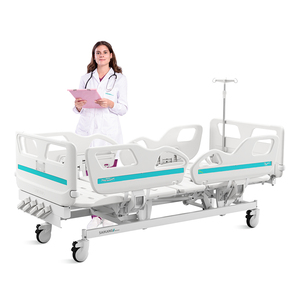
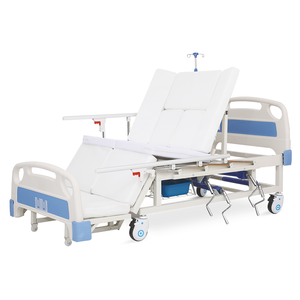
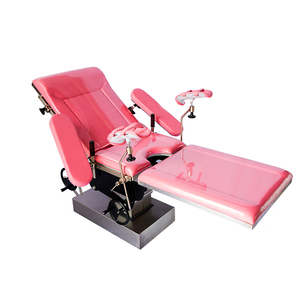
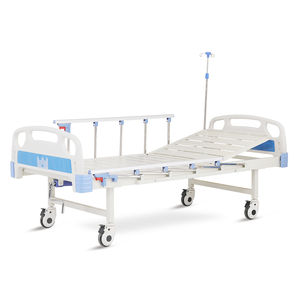
Technical Standards, Regulatory Frameworks, and Procurement Benchmarks for Medical Transport Stretchers
In modern clinical environments—spanning emergency rooms (ER), intensive care units (ICU), operating theaters, and pre-hospital transport—the medical transport stretcher serves as a vital component of patient safety and clinical workflow. As global healthcare infrastructure expands, medical procurement directors, biomedical engineers, and hospital supply chain officers face mounting pressure to source equipment that balances rigorous international regulatory standards with total cost of ownership (TCO) optimization.
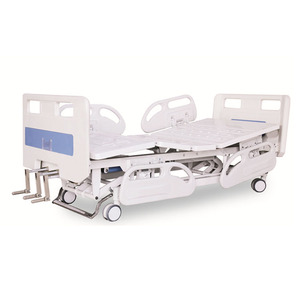
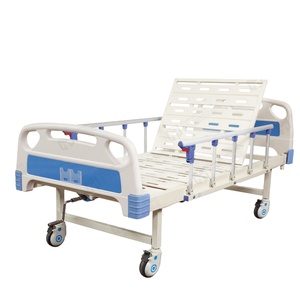
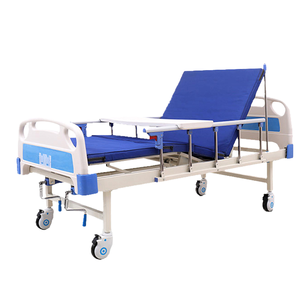
This technical report delivers an analytical breakdown of CE-certified transport stretchers and specialized hospital beds. It examines mechanical framework integrity, compliance with European Medical Device Regulations (MDR 2017/745), ergonomic developments, and global procurement trends driving factory manufacturing choices in 2025 and beyond.
“Information Gain Insight: Hospital emergency patient transfers account for over 45% of occupational musculoskeletal injuries among nursing staff. Selecting transport stretchers with dual-hydraulic elevation systems and central braking directional control reduces physical strain while mitigating patient fall risks during high-speed transit.”
1. Regulatory Compliance Frameworks: CE MDR & Harmonized Standards
To operate legally within European Union member states and international territories that adopt EU frameworks, medical stretchers and patient transfer beds must fulfill stringently audited safety requirements. Manufacturers must move beyond basic ISO 9001 quality management to hold robust ISO 13485:2016 Certification for Medical Devices.
When evaluating CE certified transport stretcher factories, procurement officers must verify documentation compliance against two critical harmonized standards:
- EN 1865-1 (Patient handling equipment used in road ambulances): Defines physical dimension limits, mechanical strength, impact resistance, and quick-release locking mechanisms necessary to withstand deceleration forces up to 10g during vehicle movement.
- EN 60601-2-52 (Particular requirements for basic safety and essential performance of medical beds): Specifies side-rail gap tolerances (to prevent head, neck, and limb entrapment), structural frame overload capacity, and electrical/hydraulic system isolation metrics.
| Compliance Benchmark | Standard Reference | Engineering Specification Requirement | Clinical Risk Mitigation |
|---|---|---|---|
| Entrapment Prevention | EN 60601-2-52 Clause 201.9.1 | Side rail gap spacing < 120mm under 250N force | Eliminates patient asphyxiation and limb trapping |
| Dynamic Load Stability | EN 1865-1 Section 4.3 | Safe Working Load (SWL) tested to 1.5x rating (min 250kg) | Prevents structural failure during bariatric transport |
| Surface Decontamination | ISO 21702 / ISO 22196 | Antimicrobial powder coating + non-porous ABS plastics | Inhibits MRSA and bacterial biofilm proliferation |
| Radiolucency Integrity | IEC 60601-1-3 | Phenolic resin or carbon-fiber mattress deck boards | Enables full-body C-Arm X-Ray imaging without transfer |
2. Technological & Engineering Development Trends
The manufacturing architecture of patient transport stretchers has evolved from basic mechanical carts into high-precision, multi-functional medical systems. Manufacturers are integrating advanced materials and ergonomic systems to address key clinical challenges.
Dual-Pedal Hydraulic Elevation
Independent hydraulic cylinders positioned at the head and foot allow smooth height adjustment (Hi-Lo), Trendelenburg (-18°), and Reverse Trendelenburg (+18°) positioning without requiring electrical power sources.
5th Wheel Directional Steering
A retractable central 5th wheel engages dynamically to pivot stretchers around tight hospital corridor corners, maintaining straight-line tracking over long pathways with minimal operator force.
X-Ray Translucent Decking
Full-length radiolucent bed bases with integrated cassette slide tracks allow trauma care teams to perform emergency fluoroscopy directly on the stretcher, saving critical minutes during resuscitation.
Additionally, modern manual hospital beds and emergency stretchers utilize advanced metallurgical treatments. Structural frames are fabricated from cold-rolled steel tubing (1.0mm to 2.0mm wall thickness), undergo multi-stage automatic phosphate washing, and are coated with electrostatic anti-microbial epoxy powder. This prevents corrosion from hospital-grade chemical disinfectants containing hydrogen peroxide or sodium hypochlorite.
3. Global Healthcare Procurement Trends (2025–2030)
Substantial shifts in international healthcare supply chains are altering how hospital networks and government health ministries issue tenders for medical furniture. Key trends shaping procurement decisions include:
A. Demand for Modular & Multi-Functional Platforms
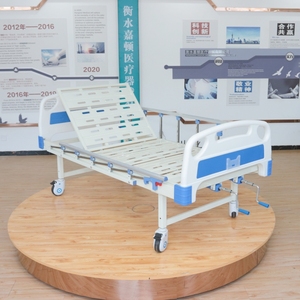
Hospitals are consolidating equipment inventories. Rather than purchasing distinct units for trauma transport, recovery, and radiological examination, procurement teams prefer versatile stretchers equipped with fold-down side rails, integrated oxygen cylinder holders, push-handle CPR releases, and IV pole sockets. Multi-functional manual beds with knee-rest and back-rest articulation (such as 2-crank and 3-crank models) are increasingly deployed across general medical wards to reduce equipment complexity.
B. Total Cost of Ownership (TCO) & Lifecycle Maintenance
Purchasing decisions are no longer driven solely by initial unit price. Biomedical engineering departments assess 10-year TCO parameters, evaluating:
- Standardization of replacement parts (e.g., universal 125mm or 200mm central-locking casters).
- Tool-less removal of headboards, footboards, and side rails for rapid maintenance.
- Availability of factory-direct spare parts kits and technical documentation.
C. OEM/ODM Customization for Regional Tender Compliance
Public tenders frequently specify unique dimensional parameters, color coding, or specialized side-rail configurations. OEM/ODM capable manufacturers in major exporting hubs (such as Turkey and specialized Asian medical manufacturing zones) offer flexible engineering adaptations—allowing distributors to tailor products to specific tender specifications.