
Medical Equipment &
Hospital Bed Insights
Explore professional guides, clinical innovations, and technical standards from Erpomed.
Healthcare Furniture
Innovations & Trends
Stay informed with expert news on ICU beds, delivery tables, and medical equipment standards.
China Best Pediatric Hospital Bed Manufacturers?
Table of Contents
- Pediatric Hospital Bed Manufacturing in China: An Overview
- Key Features of High-Quality Pediatric Hospital Beds
- How to Evaluate Chinese Pediatric Bed Manufacturers
- Safety, Standards, and Certifications to Verify
- Comparing Suppliers, Customization, Pricing, and After-Sales Support
- FAQS
- Conclusion
- Related Posts
Choosing among China’s best pediatric hospital bed manufacturers requires more than comparing catalog prices. A reliable supplier should understand children’s safety, caregiver routines, infection control, and hospital workflow. The right pediatric hospital bed may include a low platform, secure side rails, quiet casters, rounded edges, and intuitive nurse controls. Small details matter. A loose rail or difficult-to-clean joint can create serious operational concerns.
This introduction examines how experienced manufacturers design, test, and support pediatric beds for hospitals, clinics, and medical distributors. It considers frame strength, electrical safety, mattress compatibility, cleaning access, load testing, and product documentation. Buyers should also review quality systems, such as ISO 13485 certification, while confirming market-specific regulatory requirements. Factory audits, sample inspections, and user feedback can reveal more than polished brochures. A hospital bed must perform during busy shifts, not only during a product demonstration.
No manufacturer is perfect. Some suppliers offer excellent engineering but limited after-sales service. Others provide flexible customization but inconsistent production control. That difference deserves attention. We will compare manufacturing experience, design capability, customization options, quality assurance, delivery reliability, and technical support. Practical evidence should guide the decision. Ask for test reports, production photos, warranty terms, and references from comparable healthcare facilities. The strongest supplier is not always the cheapest or most famous. It is the partner that communicates clearly, corrects weaknesses, and consistently delivers safe, maintainable equipment for children.
Pediatric Hospital Bed Manufacturing in China: An Overview
China Best Pediatric Hospital Bed Manufacturers?
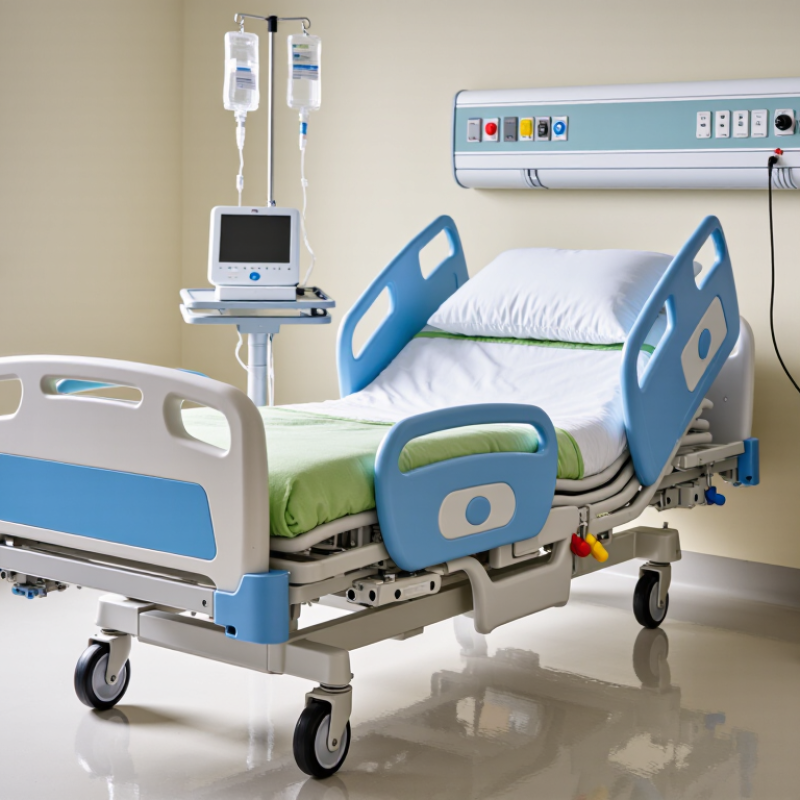
Pediatric hospital bed manufacturing in China combines medical engineering, metal fabrication, and child-focused design. Reliable manufacturers usually begin with hospital requirements, patient age ranges, and ward layouts. A suitable bed should offer a low entry height, rounded corners, secure side rails, and smooth surfaces. These details reduce injury risks and simplify daily cleaning.
Experienced buyers should inspect material certificates, welding quality, load-test records, and production traceability. Stainless steel or coated steel can support repeated disinfection when properly processed. Medical-grade casters should move quietly across typical ward flooring. Factory audits also reveal practical conditions, including worker training, inspection equipment, and storage discipline. A sample bed matters more than attractive photographs. Small issues may appear during assembly or clinical trials. Some specifications need revision after nurses test the bed beside real equipment.
Tips: Request technical drawings, test reports, and a production sample. Check rail gaps, mattress dimensions, brake strength, and emergency access. Ask how the manufacturer manages design changes and replacement parts. Confirm whether quality inspections occur during production, not only before shipment. Pediatric furniture requires careful communication because comfort, safety, hygiene, and durability often conflict. A bed may look excellent but still feel difficult to operate. Feedback from nurses and caregivers should guide the final design.
Key Features of High-Quality Pediatric Hospital Beds
When evaluating China’s best pediatric hospital bed manufacturers, inspect function before appearance. High-quality beds offer low, adjustable heights for safer transfers and easier caregiver access. Locking casters should remain stable during procedures and transport. Keep it simple. Safety rails need smooth operation, secure latches, and clear visibility for nurses and parents. Bed openings should reduce entrapment risks, while rounded edges protect active children from sharp contact.
Cleaning performance matters every day. The CDC reports that approximately one in 31 hospital patients has a healthcare-associated infection on any given day. This finding supports sealed joints, removable components, and surfaces compatible with approved disinfectants. A pediatric mattress should fit tightly without dangerous gaps. An integrated scale can reduce repeated lifting during feeding or weighing, but calibration must be quick and reliable. Small details often decide whether a bed works well at 3 a.m.
The WHO Global Patient Safety Action Plan 2021–2030 states that medication-related harm represents about half of preventable harm in medical care. Bedside organization therefore matters. Safe cable routing, accessible oxygen connections, and visible alarm controls can reduce confusion around treatment. Manufacturers should document testing against applicable medical-bed, electrical-safety, and pediatric requirements. A feature list is not enough. Some attractive designs still create awkward tubing angles or noisy movements. Direct ward trials expose these weaknesses, and buyers should record staff feedback before placing large orders.
How to Evaluate Chinese Pediatric Bed Manufacturers
Choosing the best pediatric hospital bed manufacturer in China requires more than comparing catalog prices. Evaluate evidence, not polished factory photographs. Ask for ISO 13485 certification, current test reports, and documented quality procedures. Verify that each certificate covers the actual bed model. A reliable manufacturer should explain platform dimensions, safe working load, side-rail gaps, and emergency lowering performance. These details affect a small patient’s safety. Request technical drawings before discussing customization.
During a factory audit, inspect welding points, actuator routing, castor brakes, and surface finishes. Run a sample bed through repeated height adjustments. Listen for unusual motor noise. Check whether the rails latch without excessive force. Ask how workers record incoming steel, electrical parts, and final inspections. Traceability matters when a component fails months later. One weak inspection record can reveal a larger quality problem. No audit is perfect.
Do not rely on one approved sample. Order pre-production samples and test them with realistic mattresses and accessories. Use an independent laboratory when performance claims remain unclear. Review training records, complaint handling, spare-parts planning, and delivery history. A dependable supplier gives realistic lead times and written acceptance criteria. Ask how quickly technical support responds after installation. Manufacturers may promise customization too quickly. That deserves scrutiny. Factory visits can also miss hidden subcontracting, so require written disclosure of outsourced processes and their controls.
China Best Pediatric Hospital Bed Manufacturers? - How to Evaluate Chinese Pediatric Bed Manufacturers
| Evaluation Dimension | Suggested Weight | What to Evaluate | Recommended Benchmark or Verification Method | Required Evidence |
|---|---|---|---|---|
| Child-Specific Safety Design | 20% | Protection against entrapment, falls, unintended movement, accessible pinch points, and unsafe gaps for infants and children. | Confirm that the bed design is assessed against EN 50637, which specifies additional safety requirements for medical beds used by children. Check mattress-to-rail fit, side-rail operation, locking mechanisms, and safe working clearances. | Applicable test reports, risk assessment, dimensional drawings, mattress compatibility data, and photographs of safety features. |
| Medical Electrical Safety | 15% | Electrical insulation, leakage current, protective earth, dielectric strength, motor protection, and control-system safety. | For electrically operated beds, request testing to IEC 60601-1 and the bed-specific requirements of IEC 60601-2-52, or the equivalent adopted national standard. | Valid laboratory test report, electrical schematic, component specifications, ingress-protection information, and production test records. |
| Quality Management System | 12% | Control of design changes, incoming materials, production processes, traceability, nonconforming products, and corrective actions. | Prefer a current ISO 13485 certificate covering the relevant medical-device scope. Verify the certificate issuer, validity, site address, and product scope independently. | Current ISO 13485 certificate, quality manual index, process-control plan, inspection records, and recent audit or corrective-action summary. |
| Risk Management and Usability | 10% | Identification and control of hazards related to children, caregivers, nurses, cleaning staff, transport, power loss, and misuse. | Review a documented process aligned with ISO 14971 for medical-device risk management and, where relevant, IEC 62366-1 for usability engineering. | Risk-management file index, hazard analysis, use-related risk analysis, residual-risk evaluation, and user-validation records. |
| Mechanical Performance | 10% | Safe working load, static and dynamic strength, backrest and leg-rest durability, caster performance, frame stability, and side-rail endurance. | Request test results using the declared safe working load and the applicable requirements of IEC 60601-2-52. The declared load should clearly distinguish patient weight from accessories and mattress weight. | Load-test reports, fatigue-test records, stability tests, caster test results, safe-working-load label, and engineering drawings. |
| Materials and Infection Control | 10% | Resistance to hospital disinfectants, corrosion, fluid ingress, cleanability, smooth surfaces, and elimination of dirt-collecting areas. | Verify compatibility with the healthcare facility’s approved disinfectants. Check coatings, stainless-steel grades where used, removable components, sealed joints, and mattress-cover materials. | Material declarations, chemical-resistance test results, cleaning instructions, coating specifications, and sample-cleaning validation records. |
| Actuators and Control System | 8% | Motor duty cycle, noise, hand-controller protection, emergency lowering, battery backup, cable routing, and prevention of unintended activation. | Confirm the actuator manufacturer, rated load, duty cycle, ingress protection, emergency function, and availability of replacement parts. Controls should be intuitive and protected from accidental operation by children. | Actuator datasheets, wiring diagrams, duty-cycle test, noise measurement, battery test, controller sample, and spare-parts list. |
| Regulatory Documentation | 7% | Completeness and consistency of technical documentation for the target destination market. | For China, verify the applicable medical-device registration or filing status with the National Medical Products Administration (NMPA). For export markets, confirm the applicable requirements such as EU MDR, UK rules, or FDA requirements before ordering. | Registration or filing information where applicable, declaration of conformity, technical file index, labeling samples, instructions for use, and applicable certificates. |
| Manufacturing Capability | 5% | Production capacity, process control, assembly consistency, testing equipment, engineering capability, and subcontractor management. | Conduct a remote or on-site audit. Confirm that critical assembly, wiring, final inspection, and functional testing are controlled at the proposed manufacturing site rather than handled without documented oversight. | Factory audit checklist, process flow chart, equipment list, calibration records, production-line photographs, and sample final-inspection forms. |
| Customization and Clinical Fit | 2% | Compatibility with pediatric wards, room dimensions, mattress sizes, oxygen equipment, IV poles, monitoring devices, and caregiver workflows. | Evaluate a production-equivalent sample. Confirm dimensions, minimum and maximum platform height, turning radius, accessory interfaces, and compatibility with the hospital’s mattress and equipment requirements. | 2D or 3D drawings, product specifications, accessory matrix, sample approval report, and written change-control procedure. |
| After-Sales Support | 1% | Warranty coverage, response time, technical training, spare-parts availability, preventive maintenance, and complaint handling. | Request a written service-level agreement. A practical supply plan should define critical spare parts, troubleshooting procedures, warranty exclusions, and technical support channels. | Warranty terms, spare-parts price list, service contacts, maintenance manual, training plan, and complaint-response procedure. |
Safety, Standards, and Certifications to Verify
China Best Pediatric Hospital Bed Manufacturers?
Safety, Standards, and Certifications to Verify
When evaluating pediatric hospital bed manufacturers in China, certification documents deserve careful inspection. Ask for the exact model number, certificate scope, issuing body, and expiration date. A general factory certificate is not enough.
Check whether the bed follows relevant medical-device and electrical-safety requirements for your market. Common references may include ISO 13485 for quality management, ISO 14971 for risk management, and IEC 60601-2-52 for medical beds. Requirements differ by country. Confirm them with an independent compliance specialist.
Look closely at the test evidence. Reports from an ISO/IEC 17025 accredited laboratory should identify the tested sample and test conditions. Important checks include side-rail strength, mattress-platform gaps, pinch points, maximum load, castor locking, emergency lowering, and cleaning resistance. Small gaps matter. Children can explore them quickly.
Request production records, inspection plans, material traceability, and corrective-action reports. A factory audit should examine welding quality, electrical grounding, battery protection, and final assembly—not only the showroom. Photographs can help, but physical samples reveal more.
Certification papers can look impressive while covering an older model. That is a common weakness. I would compare the label on the bed with every submitted document. It is also wise to repeat critical tests after design changes. No supplier is perfect, and even a careful review may miss a hidden risk.
Comparing Suppliers, Customization, Pricing, and After-Sales Support
China Best Pediatric Hospital Bed Manufacturers?
Choosing a pediatric hospital bed supplier requires more than comparing catalog photos. Review manufacturing experience, quality systems, export records, and production capacity. Ask for test reports, material specifications, and a recent factory audit. A reliable supplier should explain frame strength, coating durability, rail safety, and cleaning resistance in practical terms. Request a sample before placing a large order. Small details matter, such as quiet casters, rounded corners, and clearly marked adjustment controls.
Customization can include bed dimensions, colorful panels, mattress platforms, IV poles, and oxygen-cylinder holders. Confirm whether custom parts affect delivery time or maintenance access. Pricing should separate the bed, accessories, packaging, shipping, installation, and spare parts. The cheapest quotation may omit essential safety components. Compare the full ownership cost, not only the unit price. I have seen specifications look impressive, yet the sample felt less stable than expected. That is worth questioning.
Tips: Ask for a written warranty, response times, spare-parts availability, and remote troubleshooting procedures. Clarify who handles damaged goods during transport. Check whether staff training is included. After-sales support should provide replacement parts, manuals, and technical guidance. Keep every requirement in the contract. Verbal promises can disappear. A final inspection with photos and load-testing records can reduce unpleasant surprises.
China Pediatric Hospital Bed Supplier Evaluation Priorities
This neutral procurement benchmark shows the relative importance of key factors when comparing pediatric hospital bed suppliers, including customization, pricing, safety, delivery, and after-sales support.
The percentages represent evaluation weights in a structured purchasing model and do not represent any individual company or brand.
FAQS
Choose low adjustable heights, locking casters, secure side rails, rounded edges, and clear visibility. Small details matter.
Rails should move smoothly, latch securely, and avoid dangerous openings. Children explore quickly.
Sealed joints and removable parts support thorough cleaning with approved disinfectants. Cleanability matters daily.
The mattress should fit tightly against the platform, without gaps that could trap small body parts.
An integrated scale can reduce repeated lifting during feeding or weighing. Calibration must remain quick and reliable.
Request model-specific certificates, current test reports, quality procedures, and production inspection records. Factory certificates alone are insufficient.
Inspect welds, actuator routing, castor brakes, grounding, battery protection, and surface finishes. Do not trust photographs alone.
Use realistic mattresses and accessories, then repeat height adjustments, rail movements, braking, and emergency lowering. Listen for motor noise.
Check applicable medical-device, risk-management, electrical-safety, and medical-bed requirements in your market. Requirements vary by country.
Review subcontracting disclosures, traceability records, complaint handling, spare-parts planning, and staff feedback from ward trials. No audit is perfect.
Conclusion
China has become an important source of pediatric hospital beds, offering manufacturers with capabilities in product development, large-scale production, and export services. A high-quality pediatric hospital bed should combine a stable structure, smooth height adjustment, secure side rails, reliable casters, comfortable positioning functions, and child-friendly design details. These features help support patient safety, caregiver efficiency, and practical use in hospitals, clinics, and care facilities.
When evaluating Chinese manufacturers, buyers should review production experience, quality-control procedures, technical documentation, and communication capabilities. Safety standards and relevant certifications should be carefully verified through valid records and independent testing when appropriate. Supplier comparisons should also consider customization options, minimum order quantities, pricing transparency, delivery schedules, warranty terms, spare-parts availability, and after-sales support. A thorough assessment of these factors can help purchasers select a dependable pediatric hospital bed supplier that meets clinical requirements while providing consistent quality and long-term value.

Blog Tags: