
Knowledge Center & News

Medical Equipment &
Hospital Bed Insights

Explore professional guides, clinical innovations, and technical standards from Erpomed.

Industry Updates

Healthcare Furniture
Innovations & Trends

Stay informed with expert news on ICU beds, delivery tables, and medical equipment standards.

0%

Choosing a chemotherapy chair is not simply a matter of comparing prices or appearance. For global buyers, the right model must support patients through long infusion sessions while helping clinical teams work safely and efficiently. Small details matter: a stable footrest, reachable controls, wipe-clean upholstery, and arm supports that adjust without awkward effort.

This guide explores common chemotherapy chair types, including manual recliners, powered models, and treatment chairs with broader positioning options. Each serves different workflows, room layouts, and budgets. Powered adjustment can reduce staff effort, but it may add cost and require dependable maintenance. Manual models are simpler, though repeated adjustments can take more time. No single chair suits every clinic. That is worth remembering.

The sections ahead outline practical factors for evaluation, from frame stability and patient weight capacity to cushioning, accessories, cleaning access, and after-sales support. Buyers should request clear specifications, warranty terms, and service details rather than relying on product photos alone. A chair may look comfortable in a catalogue and feel different during a real treatment session. Whenever possible, involve nurses, facilities staff, and patient representatives in the review. Local clinical requirements and purchasing standards also vary, so confirm suitability with qualified professionals in the destination market. A careful comparison cannot remove every uncertainty, but it can make the decision more informed and transparent.
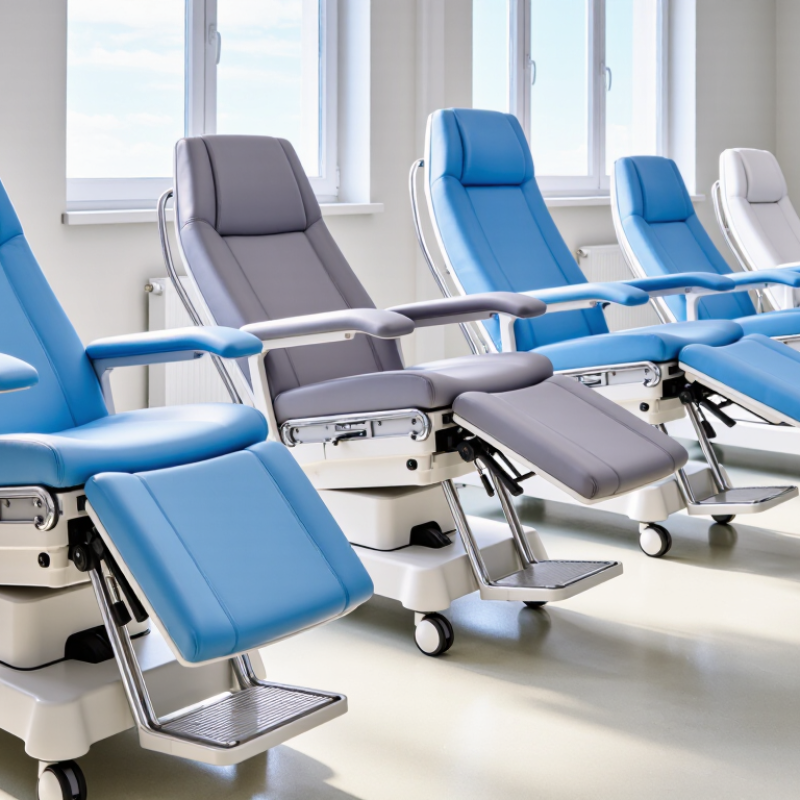
2026 Top Chemotherapy Chair Types for Global Buyers

What Is a Chemotherapy Chair and How Is It Used?

A chemotherapy chair is a clinical seat designed for patients receiving intravenous cancer treatment. It supports the patient during an infusion while giving care teams access to the arm or port and room to monitor vital signs. Common features include adjustable backrests, footrests, padded arm supports, and wheels for repositioning. Some models recline nearly flat; others prioritize compact use in busy infusion rooms. Comfort matters.

The chair does not deliver chemotherapy or replace clinical monitoring. It provides a stable place for the patient while trained staff administer prescribed treatment and observe for reactions. Treatment length varies by medication and care plan, so adjustability can matter during a short visit or several hours in the same position. The IARC Global Cancer Observatory estimated 20 million new cancer cases worldwide in 2022. That burden highlights the need for practical treatment settings, but a chair alone cannot make care accessible or comfortable.

Tips: Check weight capacity, cleanable upholstery, brake stability, and smooth adjustment before selecting a chair. Ask staff to position the arm support around the planned IV access, not force the patient into one posture. Small details count. Even good padding may feel uncomfortable after hours, so reassess positioning during treatment.

Which Main Types of Chemotherapy Chairs Are Available?

Chemotherapy chairs generally fall into manual recliners, powered recliners, and multi-position treatment chairs. Manual models use levers or hand controls to adjust the backrest and leg support. They can suit clinics needing straightforward operation and fewer electrical components. Powered chairs move with a handset, helping staff adjust a patient’s position without repeated manual effort. Not always essential.

Multi-position chairs offer more adjustment points, such as a reclining back, elevating footrest, and movable armrests. Some are designed for longer infusion visits, where a stable headrest and comfortable arm support can matter. Pediatric and wider-capacity models are also available. Their dimensions, safe working load, and adjustment range should match the intended patients and treatment space.

The categories can overlap. A powered infusion chair may also have bariatric options, for example. Small details matter. Check whether controls are easy to reach, upholstery seams can be cleaned, and wheels lock securely during treatment. Buyers should also consider room width, access for clinical staff, and how the chair will be serviced. Specifications on paper do not always reflect daily workflow. That is worth checking with staff before choosing a type.

What Features Distinguish Each Chair Type?

Chemotherapy chairs differ in posture support, adjustability, and access for care. Manual recliners use levers or hand controls to raise the footrest and tilt the back. They are usually straightforward to operate, but adjustments may require staff effort. Powered chairs let users or caregivers change positions with buttons. Smooth movement can help during long appointments, though controls should be easy to reach and clean.

Convertible treatment chairs offer a broader range of positions, sometimes approaching a flat surface for rest or clinical procedures. Their extra adjustment points can improve flexibility, but they may need more floor space. Bariatric models are distinguished by wider seats, reinforced frames, and higher stated weight capacities. Buyers should check the rated capacity, seat dimensions, and transfer space rather than relying on appearance alone.

Details matter. Look for stable armrests, accessible foot controls, and upholstery with few hard-to-clean seams. Check whether the chair allows staff to reach the patient safely from the required sides. There is no perfect configuration. A feature that helps one patient may frustrate another. Product specifications should be reviewed alongside clinical workflows and facility cleaning practices; small differences can matter, and they are easy to overlook.

2026 Top Chemotherapy Chair Types for Global Buyers — What Features Distinguish Each Chair Type?

Chair Type Typical Positioning Mobility Common Care Setting Distinguishing Features Key Considerations
Manual infusion recliner Backrest and leg rest adjust by hand; some models recline together. Usually stationary during treatment; may have casters for repositioning. Outpatient infusion rooms and clinics with straightforward positioning needs. Mechanical controls, a relatively simple design, and no powered adjustment system. Check that staff can reach and operate the controls easily, and confirm the recline range suits the care protocol.
Powered two-function infusion chair Electric adjustment commonly controls the backrest and leg rest or foot section. Generally positioned in the treatment area; some models include lockable casters. Infusion centers where patients need frequent, assisted position changes. Motorized positioning can reduce the physical effort required from patients and caregivers. Confirm power supply, hand-control access, emergency positioning options, and cleaning requirements.
Powered multi-position infusion chair Multiple powered sections may adjust independently, depending on the model. Typically designed to remain in the treatment space, with mobility varying by model. High-acuity infusion settings or clinics serving patients with varied positioning needs. More adjustment choices can support tailored comfort and easier transitions between positions. Compare the actual movement functions, control layout, maintenance needs, and available room around the chair.
Bariatric infusion chair Reclining or powered positioning varies by model. May be stationary or fitted with casters rated for the chair’s intended load. Facilities that need seating designed for higher patient weight capacities. Typically offers a higher stated safe working load and a wider seat than standard models. Verify the manufacturer’s safe working load, seat width, transfer access, and compatible accessories; do not infer capacity from appearance.
Pediatric infusion chair Positioning options vary; some designs offer recline and adjustable supports. Usually used in a dedicated treatment area; mobility depends on the design. Pediatric oncology and infusion services. Scaled seating and support features are intended to better accommodate children. Check age and size suitability, secure positioning, cleanable surfaces, and compatibility with the facility’s supervision procedures.
Transport-capable infusion recliner Reclining functions vary; certain models are designed to move patients while seated. May include push handles and lockable casters for movement within a facility. Clinics where patients need to be moved between nearby care areas without changing seats. Combines infusion seating with features intended to support controlled, short-distance transport. Confirm whether the chair is specifically designed and rated for transport; ordinary recliners should not be assumed suitable for moving patients.
Flat-position or treatment-position chair Designed to recline to a near-horizontal or specified treatment position, depending on the model. Usually stays in the treatment area; casters and transport use vary. Services that require a broader range of positions for patient care. Its defining feature is the intended recline range rather than a particular drive or control system. Check the stated positioning range, safe working load, stability, and whether the position meets local clinical requirements.

Buyer note: Features and configurations vary by model and market. Compare the published safe working load, dimensions, adjustment functions, electrical requirements, cleaning instructions, and applicable local regulatory documentation before purchase.

How Do Buyers Compare Chairs for Different Care Settings?

2026 Top Chemotherapy Chair Types for Global Buyers

How Do Buyers Compare Chairs for Different Care Settings?

The right chair depends on patient flow, treatment duration, and room layout. IARC’s Global Cancer Observatory estimated 20 million new cancer cases worldwide in 2022. That scale makes practical equipment choices important, but global figures cannot predict an individual clinic’s needs.

High-turnover outpatient units may favor powered chairs with quick positioning, wipe-clean upholstery, and accessible controls. Check that armrests move aside for transfers and that the base leaves space for staff and infusion equipment. In hospital day units, patients may sit for several hours. Wider recline ranges, stable footrests, and supportive cushions matter more than a compact footprint. Small clinics may prefer manual adjustment to reduce cost and simplify maintenance. Fit matters.

Compare more than specifications. Ask staff to test chair movement beside a real infusion stand, then check cleaning access around seams and hinges. WHO cancer-care guidance stresses matching services and equipment to care settings; a chair specification alone cannot show whether a room supports safe, smooth workflows. A neat comparison table can still miss daily friction. Buyers should also verify local service support, replacement-part availability, and safe working-load documentation before ordering.

Which Safety and Compliance Factors Matter in Global Purchasing?

A chemotherapy chair must support treatment workflows without creating avoidable risks for patients or staff. Buyers should check safe working load, frame stability, accessible controls, and smooth positioning under realistic conditions. Ask how the chair behaves during power loss and whether staff can lower it safely.

Small details matter. Cables should stay clear of moving parts, and footrests should not obstruct transfer routes. Upholstery and seams also deserve attention: surfaces need to tolerate the cleaning agents used at the facility, without cracking or trapping residue.

Compliance requires more than a certificate in a product folder.

Confirm which electrical and medical-device requirements apply in each destination market, and request current test reports, risk documentation, labeling, and instructions in appropriate languages. Requirements can differ. Do not assume approval in one country covers another.

Check whether the supplier can provide replacement parts, maintenance guidance, and local technical support over the chair’s expected service life. A checklist can still miss practical issues; measure doorways, treatment-room clearances, and patient transfer space before ordering.

We sometimes focus too much on paperwork. A hands-on evaluation with clinical and facilities staff can reveal awkward controls or difficult cleaning access that documents alone may not show.

FAQS

What is a chemotherapy chair used for?

It provides a stable seat during an intravenous infusion. Staff can reach an arm or port and monitor vital signs. It does not deliver treatment.

Which features can improve comfort during treatment?

Look for an adjustable backrest, footrest, padded arm supports, and smooth reclining. A long visit can make one position tiring. Comfort matters.

How should the arm support be positioned?

Ask staff to align it with the planned IV access. Avoid forcing the patient into one posture. Recheck positioning during treatment; padding may still feel uncomfortable after hours.

Which safety features should buyers check?

Check the chair’s safe working load, frame stability, brakes, and accessible controls. Test adjustments under realistic conditions. Small details count.

What should happen if a powered chair loses power?

Ask whether staff can lower it safely without power. Keep cables away from moving parts, and make sure footrests do not block transfer routes. Test this.

How should upholstery and seams be assessed?

Confirm that surfaces tolerate the facility’s cleaning agents. Inspect seams for cracks or areas that could trap residue. Cleaning access matters.

What documents should be reviewed before purchasing?

Check applicable requirements for each destination market. Request current test reports, risk documentation, suitable labeling, and instructions in appropriate languages. Requirements can differ.

Why measure the treatment room before ordering?

Measure doorways, chair clearances, and patient transfer space. A hands-on review may reveal awkward controls that paperwork misses. We may overvalue the checklist.

Conclusion

A chemotherapy chair is designed to support patients comfortably and safely during infusion treatment, helping care teams position and monitor them throughout a visit. Common options include manual reclining chairs, powered treatment chairs, and multi-position models that can be adjusted for different procedures and patient needs. Their features may vary in seat dimensions, backrest and leg-rest movement, control accessibility, mobility, upholstery, and ease of cleaning.

When comparing a chemotherapy chair for hospitals, clinics, or infusion centers, buyers should consider patient comfort, staff workflow, room layout, expected use, maintenance, and available support. Safety and compliance checks are also essential: review stability and weight capacity, locking systems, electrical safety for powered models, cleanability, documentation, and applicable requirements in the destination market. Matching chair type and features to the care setting can support a more practical and reassuring treatment experience.

Charlotte

Charlotte

Charlotte is a dedicated marketing professional with a strong understanding of the company’s products, customers, and industry landscape. Through her work, she combines market insight, clear communication, and practical product knowledge to create content that is both informative and valuable. She......